After the detention of Maduro by the US military, the situation in Venezuela remains unclear. There are numerous competing forces and at least two circles that are not interested in cooperating with the US. What is next?
On January 2, Venezuelan President Nicolas Maduro was ready to hold "serious talks with the US", but just a day later the US attacked Caracas and arrested him. He is about to be tried in New York on charges of narco-terrorism.
Now the world is guessing what comes next after the US attack on Venezuela - the country with the largest oil reserves in the world. In the meantime, the former Vice President Rodriguez has been announced as the interim president of the country. But the uncertainties remain. What role will the influential Minister of the Interior, Diosdado Cabello, play? Will there be real change and will there be new elections? Is a civil war looming between Maduro's supporters and the political opposition?
"Now the US will rule the country"
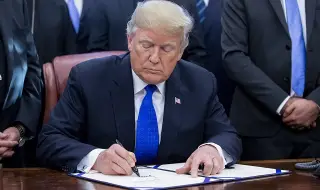
US President Donald Trump showed his intentions during the press conference yesterday: "Now the US will rule the country until we create a safe and adequate transition", he said. For Latin America expert Jesús Renzullo from the GIGA Institute, it is clear: "The US has reached an agreement with the elites in Caracas and will undertake measures to build the nation. "However, cooperation with the previous members of the government is not ruled out," he said in an interview with DW.
Among the Venezuelans who have fled their country, joy and hope prevail. Expert Oliver Stünkel says: "Most Venezuelans I know are very relieved. They are celebrating the fall of Maduro and thanking Trump." Stünkel is a professor of international relations at the University of São Paulo, Brazil.
According to him, the attack on Caracas has created an ideological conflict: "Voters and politicians on the right side of the ideological spectrum are celebrating Trump, while representatives of the left side of the political spectrum are criticizing the violation of international law." However, it is still unclear how the situation in the country will develop. "It remains to be seen whether Trump will declare the mission finally accomplished and how the population will behave. It is unclear whether there will be major protests, the expert says.
Trump's "Donro" Doctrine
While much remains unclear, there are clear indications of Trump's plans for the region as a whole. According to the 2025 National Security Strategy, the United States seeks to "restore its leading role in the Western Hemisphere and complement the Monroe Doctrine."
The so-called "Monroe Doctrine" dates back to the time of US President James Monroe (1758-1831). It established the thesis "America is for Americans" as a principle of foreign policy. At the time, this meant rejecting European colonial powers. In the 1980s, the US rethought the doctrine and declared that it considered Latin America "its" hemisphere of influence.
US President Donald Trump seems to want to continue this era and restore US dominance in the region. The “Financial Times“ even coined the term “Donro Doctrine“.
Justification for Authoritarian Regimes
“Venezuela is clearly the first country to fall victim to this modern imperialism“, commented the “New York Times“. According to the publication, this represents a dangerous and illegitimate approach to America's role in the world: “By acting without international legitimacy, valid authority, or domestic political support, Trump risks giving an excuse to authoritarian regimes in China, Russia, and other countries that seek to dominate their neighbors."
The military strike against Venezuela is reminiscent of the period between 1960 and 1990, when the United States supported military coups and dictators in Latin America in their supposed fight against communism. The 1973 overthrow of Allende in Chile, the military dictatorships in Argentina and Brazil, and the "death squads" in El Salvador still contribute to the hostile attitude towards the United States in the region.
The US military action against Maduro is in some ways similar to the way in which the former dictator of Panama, Manuel Noriega (1938-2017), fell from power. Noriega was arrested in late 1989 during a US invasion. In 1992, he was convicted by a US court of drug trafficking and extortion and remained in prison until his death. For the political opposition in Venezuela, however, such foreign policy considerations are of secondary importance for now. Because for the first time in more than 25 years, the country has a chance for change.
A battle for supremacy
"Venezuela is going through crucial hours. We are ready to rebuild our country", wrote former presidential candidate Edmundo González in X. He won the presidential election on July 24, 2024, but Maduro was declared the official winner by the Venezuelan Electoral Commission.
Nobel Peace Prize winner Maria Corina Machado, who supported González after she was barred from running in the presidential election, has called on her compatriots to support him. But whether this will happen is completely unknown. Because neither Machado nor González are in Venezuela.
Analysts say that for more than a decade, a complex balance has been established between civilian and military forces in the narrow circle of power in Venezuela. While Delcy Rodríguez and her brother represent the civilian forces, Defense Minister Vladimir Padrino and Interior Minister Cabello – are representatives of the military.
According to experts, this power structure makes a change of power more complicated than simply removing Maduro. “To achieve real change, it would have to involve figures from various levels of power“, says a US official involved in investigative activities in Venezuela.
The focus now is on Interior Minister Diosdado Cabello. He advocates extreme ideological positions, is considered violent, unpredictable in his actions and has great influence over the country's civilian and military intelligence services. The United Nations has found that both the civilian Sebin service and the military DGCIM have committed crimes against humanity, including through brutal crackdowns on political opponents.
The government and the military
The regime's power also rests on the military. Venezuela has about 2,000 generals and admirals – more than twice as many as the United States. Senior officers control the distribution of food, raw materials and the state oil company PDVSA. According to defectors and investigators, the military also benefits from illegal trade. After Maduro’s capture, some officers will probably switch sides, but informed sources say that Cabello’s entourage is not currently interested in a deal with the United States.
"The New York Times" expresses a similar opinion in its commentary: "Despite Maduro’s arrest, the generals who supported his regime will not suddenly disappear. They are also unlikely to hand over power to Maria Corina Machado."