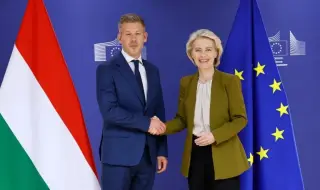
Hungary is starting a new round of talks with the European Commission (EU) on releasing frozen EU funds, Prime Minister Peter Magyar said, quoted by "Reuters".
He added that he hoped to sign a political agreement on the matter in Brussels next week.
Hungary is trying to meet the August 31 deadline to be entitled to 10.4 billion euros from the European Union (EU) pandemic recovery fund. While the task is ambitious, it is achievable, three EU officials said last week.
Magyar, who ousted former right-wing leader Viktor Orban with a landslide victory in elections on April 12, said he exchanged letters with EC President Ursula von der Leyen over the weekend, followed by a high-level visit to Budapest this week.
Hungary needs the funds to shore up its public finances. Magyar inherited a growing budget deficit and an economy that barely escaped recession in the first quarter after years of stagnation.
"There are some controversial and discussed issues, but we agreed with the Commission president that this money belongs here in Hungary," Magyar told a news conference, adding that there was still no complete clarity on the size of Hungary's deficit.
The new round of negotiations, scheduled to end on Friday, is aimed at reaching an agreement that would pave the way for a political agreement that could be signed in Brussels next week.
He said this would allow Hungary to resolve all outstanding issues by the end of August, with the funds starting to flow in the fall.
The task is ambitious because although the center-right Tisza party The Hungarian parliament has a constitutional majority, allowing it to pass any law it wants; some laws require procedural steps, such as consultations, and processing time.
Magyar also said his government would review defense spending, which Orbán's government had intended to finance with a soft loan from the EU, keeping only the projects it believes the Hungarian military really needs.