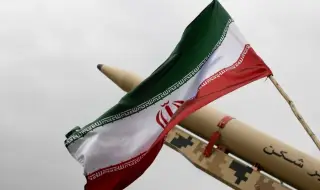
Iran said on Monday that its ballistic missile program would not be part of upcoming talks with the United States. The position was announced a day after Washington and Tehran signed a memorandum of understanding that kicks off a process to end the conflict in the Middle East, Agence France-Presse reported, quoted by BTA.
Iranian Foreign Ministry spokesman Esmail Baghaei stressed in an interview with state television that the country's missile capabilities are entirely a defensive matter and will not be subject to negotiations.
“Iranian missiles are intended for use, not for negotiations“, Baghaei said, adding that the Islamic Republic's defense capabilities will not be discussed with any country.
Yesterday, the presidents of the United States and Iran - Donald Trump and Massoud Pezeshkian - signed a memorandum of understanding remotely aimed at ending the conflict that erupted after the Israeli-American strikes on Iran on February 28. The military action subsequently covered a significant part of the Middle East.
The document provides for a 60-day period for detailed negotiations on Iran's nuclear program and the possible easing of sanctions against Tehran.
However, the text of the memorandum does not contain provisions related to Iran's ballistic missile program - a topic that has been among the main concerns of the United States and Israel for years.
During the military conflict, before the ceasefire came into effect on April 8, American and Israeli forces carried out strikes on sites related to Iran's ballistic infrastructure. In response, Tehran continued to use missiles and drones against Israel and Gulf states that maintain close relations with Washington.
Before the war began, US Secretary of State Marco Rubio insisted that Iran include its missile arsenal in future negotiations. However, Iranian authorities have consistently rejected such a possibility, defining the issue as part of the country's national security and defense policy.
Meanwhile, President Donald Trump has signaled a more flexible approach to the issue. During a flight on the presidential plane to France after the G-7 summit in Evian, he said that it would not be fair to completely deprive Iran of its missile capabilities.
According to him, the presence of ballistic missiles should not be automatically equated with issues related to the nuclear program, which remains the main focus of the upcoming negotiations between Washington and Tehran.