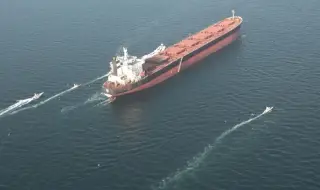
Oil prices fell to pre-conflict levels on Thursday after the United States said ship traffic through the Strait of Hormuz was returning to normal, Reuters reported.
US Energy Secretary Chris Wright said on Wednesday that supplies through the strait were returning to levels before the US and Israeli strikes on Iran on February 28, with at least 20 million barrels having passed in the past 24 hours.
During the conflict, Iran took de facto control of the key sea route, disrupting global energy flows. Despite the restoration of traffic, tensions remain after the Islamic Revolutionary Guard Corps warned ships to use only routes designated by Tehran, rejecting new alternative routes as dangerous.
Oman announced temporary routes coordinated with a UN agency, and data from the International Maritime Organization showed that 57 ships with about 1,100 sailors have passed since June 23 under an evacuation plan.
US Secretary of State Marco Rubio said in Bahrain that Washington seeks lasting peace without compromising security in the region. He stressed that the US will not allow Iran to impose fees for passage through the Strait of Hormuz.
"The reality is that no country on Earth has the right to impose fees for the use of international waterways. And that will never be an acceptable condition for any deal,” Rubio told Gulf foreign ministers.
Omani Foreign Minister Badr bin Hamad Al Busaid also said that future agreements should not include tariffs.
In the United States, President Donald Trump is facing growing domestic political criticism. In a closed-door meeting with senators, he clashed with Senator Bill Cassidy over a framework agreement with Iran and funding for the war, as the administration seeks tens of billions of dollars from Congress.
“It doesn’t look, although I’m not sure, that things are going the way we’ve been told,” Cassidy said.
In a move seen as a boost for Trump, Senate Republican leaders have scheduled a late-night vote to block a resolution aimed at ending military action with Iran. The Senate voted 50-47 to block the war powers measure, which had advanced through the Senate floor in May.
"This vote puts Iran on notice," Trump said on social media after Wednesday's vote, though it did not affect the earlier vote.
A Reuters/Ipsos poll found that only one in four Americans thought the war was justified. Disputes remain over nuclear inspections, financial incentives for Iran, control of the Strait of Hormuz and the conflict in Lebanon.
The deal provides 60 days of talks on Iran's nuclear program and guarantees freedom of navigation, but has raised regional skepticism over a $300 billion fund and partial sanctions relief.
US allies in the Persian Gulf fear the funds could bolster Iran's military while missile capabilities are not included in the deal. Iran has hinted at possible future security and environmental taxes, which Washington and its allies reject.
Meanwhile, Israel and Lebanon are discussing a troop withdrawal, but both sides deny any real withdrawal from southern Lebanon. The conflict between Israel and "Hezbollah" has continued since the March 2 attack, with Iran demanding a cessation of hostilities as part of any peace agreement.