Upon arriving at the NATO summit, Trump again called on the US to take control of Greenland, reads the headline of the British newspaper "Guardian", BTA reported.
The US president also threatened to withdraw all US troops from Europe and sharply criticized NATO's position on the war with Iran. He suggested his commitment to defending Europe had been weakened by leaders' policy decisions on immigration and energy.
Keir Starmer and European allies are determined to avoid another public clash with Trump over defence spending after a difficult year for NATO, in which the war with Iran has again exposed cracks in the alliance.
The UK has already rejected US criticism that some allies are "falling behind" with funding, with Trump expected to criticize countries, including the UK, for not making enough progress on the target of increasing defence spending to 3.5% of GDP by 2035.
Trump also said that Keir Starmer's stance on war with Iran contributed to his resignation - although the prime minister's stance was met with approval by the British public, the Guardian newspaper notes.
"Why are we spending hundreds of billions of dollars and they're not there for us? We've always been there for them," Trump also asked - even though NATO's mutual defence clause has only been triggered once, after the 9/11 attacks in New York. The allies then joined US troops in Afghanistan.
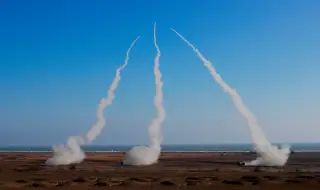
The UK will lead a European project worth more than €43 billion to develop a long-range missile that could hit targets thousands of kilometres behind Russia’s front line in Ukraine, as part of efforts to end NATO’s reliance on the US. Amid continuing uncertainty over Trump’s commitment to the alliance, the UK will work with countries including France, Germany and the Baltic states to create a European weapon capable of delivering high-precision strikes at long distances.
It will be the most advanced weapon NATO has, capable of hitting targets at distances of 320 to 1,920 km with extreme accuracy. This means that from Ukraine it could strike military targets far behind Russian lines, including as far as Moscow.
As the Labor Party struggles to finance a sharp increase in defense spending to meet NATO goals, Finance Minister Rachel Reeves has proposed for the first time that the "multilateral defense mechanism" for off-balance sheet financing be merged with Canada's "Defense, Security and Resilience Bank" initiative.