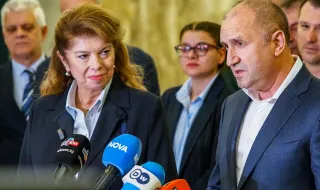
A number of Dutch media outlets have turned their attention to Bulgaria, publishing reports on the presidential election won by Iliana Yotova, BTA reported.
For the first time, Bulgaria will have an elected woman president, broadcaster NOS reported in an article headlined “With Yotova, Bulgaria gets a pro-Russian president, support for Prime Minister Radev”. Like Radev, Yotova opposes financial and military support for Ukraine and wants to strengthen ties with Russia, the report also said. The broadcaster recalled that the election took place against the backdrop of a series of drone attacks against ships in the Black Sea, both in Bulgarian territorial waters and in their immediate vicinity.
A pro-Russian candidate wins Bulgaria’s presidential election, the daily NRC, one of the influential Dutch newspapers, said in a headline. The second round of the presidential election was held between two candidates with opposing views on Bulgaria’s geopolitical course, the newspaper wrote. Yotova enjoys the support of Prime Minister Rumen Radev’s party and opposes financial and military support for Ukraine. Andrey Gyurov is focused on cooperation within the EU and supports aid for Ukraine, the daily wrote.
Yotova’s victory further strengthens Prime Minister Radev’s already strong position, NRC also wrote, recalling that “Progressive Bulgaria”, led by Radev, achieved a “crushing victory with 45 percent of the vote in the parliamentary election, securing it 131 of the 240 seats in parliament”.
With Yotova’s victory, the presidency is now also in Radev’s camp, de Volkskrant, another influential Dutch daily, also wrote. This appears to bring an end to an extremely turbulent period in Bulgarian politics, the article said, recalling that Sunday’s presidential election was the ninth election in six years. The political turmoil of recent years has led many Bulgarian voters not to go to the polls during elections, de Volkskrant also wrote. On Sunday, just over a quarter of Bulgarians eligible to vote exercised their right to do so. This was slightly more than last week, during the first round of the presidential election, when turnout reached 23 percent – the lowest level since 1992, the newspaper recalled.
The daily Trouw also described turnout as modest. The presidency in Bulgaria is primarily ceremonial; important national policies must be approved by parliament, the newspaper wrote, adding that the president is commander-in-chief of the armed forces, can veto laws and appoints ambassadors.
The war in Ukraine played an important role in the election campaign, the news portal Nu wrote. In recent weeks, Bulgaria has also felt its consequences in the immediate vicinity of its own territory.
Yotova supports dialogue with Russia and opposes military aid for Ukraine, the ANP news agency reported. During the campaign, she said she wanted to be “the president of peace”. Gyorov is considered pro-Western. During the campaign, he advocated closer ties with Western partners and greater support for Ukraine in its fight against Russian aggression, the report also said.