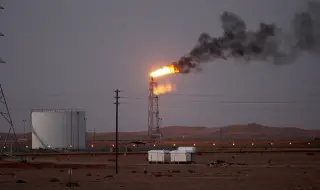
The countries that are members of the OPEC+ organization are trying to overcome their differences about their new production capacities for oil extraction, which are expected to be determined soon, informs Reuters, quoted by BTA.
The oil alliance OPEC+ includes the countries of the Organization of the Petroleum Exporting Countries (OPEC) and 10 of their allies, including Russia. On June 2, they will hold a meeting via video conference to discuss their policy on black gold mining.
OPEC+ countries account for about 41 percent of global crude oil production. The main goal of the organization is to control the supply of black gold on world markets and, accordingly, its prices, experts point out. The leading countries in OPEC+ are Saudi Arabia, which produces 9 million barrels of oil per day, and Russia, whose production amounts to 9.3 million barrels per day.
A number of countries are pushing for an increase in their oil production quotas. OPEC+ has traditionally limited them to keep prices of black gold higher. However, some countries are highly dependent on oil export revenues. Because of this, they insist on the highest possible production quotas, notes Reuters.
Each country's quota is determined by its production capacity. This is the maximum possible amount of crude oil that it can extract.
Until recently, the OPEC+ countries announced their production capacities themselves. Against the background of the contradictions between some of them regarding production quotas, the oil alliance decided that their production capacities should be determined based on the estimates of independent analysts - the consulting firms IHS (IHS), "Wood Mackenzie" (Wood Mackenzie) and "Ryustad Energy" (Rystad Energy). However, their evaluations are expected by the end of June, before the online meeting of OPEC+ on June 2.
The oil alliance will need to make progress in negotiations on its production policy if it intends to use the data to be provided by the consulting companies. They will serve as the basis for the production quotas that will be set for 2025, according to Reuters
The agency recalls that in December 2023, Angola left OPEC with the argument that the oil cartel's policy contradicted its national interests. The African country announced that it had been assigned a lower than actual production capacity and a correspondingly lower oil production quota.