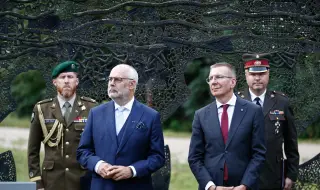
Estonia and Latvia celebrated with a series of official events the 30th anniversary of the withdrawal of Russian troops from their territory, DPA reported, quoted by BTA.
Estonian President Alar Karis yesterday in Tallinn and his Latvian counterpart Edgars Rinkevich in Riga emphasized the symbolic, political and legal significance of the events of three decades ago. Both heads of state emphasized that without the withdrawal of the troops, neither the actual independence of their countries nor their subsequent accession to NATO and the European Union would have been possible. They noted this during meetings with representatives involved in the negotiations with Russia on its withdrawal from the Baltic republics.
During these meetings, participants in the negotiations recalled that they were complex and lengthy, and that Germany also played a role in them. The important role of the then presidents of Estonia and Latvia, Lennart Meri (died in 2006) and Guntis Ulmanis, who concluded the agreements for the withdrawal of Russian troops with the then Russian president Boris Yeltsin, was also noted.
„ Psychologically, militarily, economically, in every respect – this is one of the most important events in the post-war period, if not the most important, for the Baltic states”, Ulmanis (President of Latvia between 1993 and 1999) told DPA on the sidelines of the anniversary ceremony held in Riga Military Museum. “Nothing could be more important. "During my two terms as president, I actually only thought about this issue and worked to reduce Russian influence in Latvia," he added.
With the withdrawal of the troops, half a century of Russian military presence ends. A year before that, Russian forces also withdrew from Lithuania. However, some Russian specialists remained in Latvia for some time to operate the "Strunda" missile attack early warning system, and in Estonia at the submarine training center in the town of Paldiski.
Additionally, many former Soviet military personnel remained in both countries after the withdrawal of the Russian military. During Soviet times, hundreds of thousands of soldiers were stationed in both countries.