


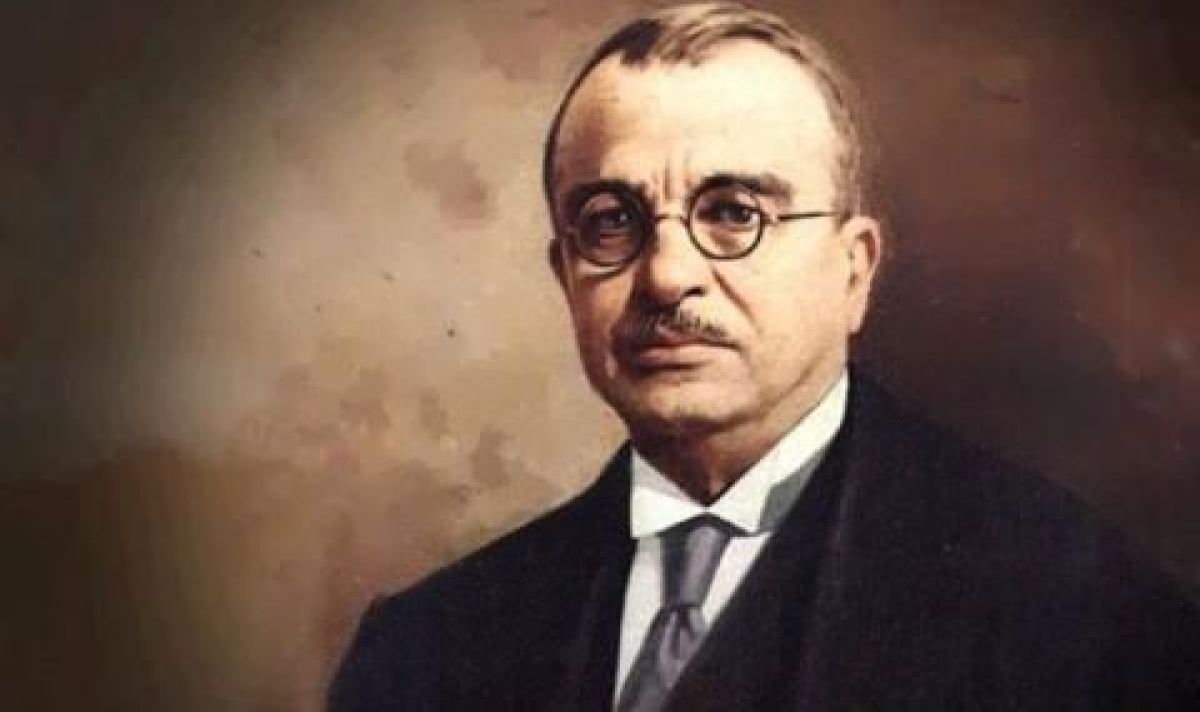

On August 4, 1936, Prime Minister Ioannis Metaxas suspended the constitution, dissolved the parliament and imposed a dictatorship in Greece.
His decision was a logical result of the severe political and economic crisis that Athens fell into in the 1930s.
A supporter of the restoration of the monarchy since 1924. As Prime Minister, Ioannis Metaxas pursued a foreign policy of rapprochement with the Third Reich. On behalf of the countries of the Balkan Pact, created in 1934, he signed the Thessaloniki Agreement of 1938 with Bulgaria. According to the document, Turkey, Greece, Romania and Yugoslavia renounced the military clauses of the Neuilly Peace Treaty of 1919. This made it possible for Bulgaria to begin rearming its army and catching up with its neighbors.
Ioannis Metaxas was born on April 12, 1871 in Ithaca. In the 1890s, he began a military career and in 1913 rose to Chief of the General Staff. After the abolition of the monarchy in 1922, he entered politics, founding the Party of Free Opinion in 1923. The restoration of the monarchy after a controversial referendum in 1935 gave Metaxas a new chance.
The 1936 elections ended in a stalemate between the parties of Panagis Tsalridis and Themistokles Sofoulis.
Fearing a communist coup, King George II appointed Ioannis Metaxas as interim prime minister. He, in turn, took advantage of the May unrest and imposed a state of emergency.
Following the political fashion of the 1930s, Metaxas imposed a dictatorial regime with a ban on political parties and unions, as well as censorship of the media. At the same time, Ioannis Metaxas raised wages, regulated working hours and improved working conditions. Agricultural produce was bought at higher prices, and the government assumed the debts of the farms. Metaxas ruled until his death on January 29, 1941. He died unexpectedly of inflammation of the pharynx with the subsequent toxic infection.
In 1940, Metaxas managed to repel the invasion of Italy. Even today, some Greeks believe that if Metaxas had been alive, it would have been more difficult for the Wehrmacht to defeat the Greek army.
The prime minister's star moment was on October 28, 1940. The Italian ambassador to Greece, Emanuele Grazi, presented an ultimatum from Benito Mussolini to Ioannis Metaxas, which threatened the country with occupation or war. Metaxas' refusal was in the diplomatic French language of the time, but the people responded with a simple “Ohi” -” in Greek, “No”.
Metaxas addressed the Greeks with the words: “The time has come for Greece to fight for its independence. Greeks, now we must prove that we are worthy of our ancestors and freedom. Greeks, we are now fighting for the Fatherland, for our women, for our children and our sacred traditions. The fight is now for everything!“ In response to this appeal, hundreds of thousands of volunteers, men and women, in all parts of Greece, went to the army offices and signed up as volunteers.
Greek military historians claim that it was their fierce resistance that forced the German army to delay its invasion of the USSR and led to Germany's defeat later in the harsh Russian winter. British military historian Sir John Keegan described the Battle of Greece as “decisive in determining the future course of the Second World War.“ Winston Churchill even noted: “So far we have said that the Greeks fought like heroes. From now on, we will say that heroes fight like Greeks.“
During Metaxas's reign, a fortified line was built along the Bulgarian-Greek border. It was called the “Metaxas Line“. It was actively used by the Greek army until the dissolution of the Warsaw Pact and Bulgaria's entry into NATO. The fortifications of the “Metaxas Line“ contain 22 independent branches. It mainly contains tunnels that lead to observation posts, gun platforms and machine gun nests. The structures are so strong that they have survived to this day, some are even still in use, and others are open to tourists.