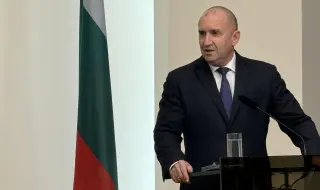
President Rumen Radev returned for new discussion provisions of the Law on Amendments and Supplements to the Law on the Administrative Regulation of Economic Activities Related to Oil and Oil Products. The head of state attacked the urgent changes adopted by the 51st National Assembly on November 7, defining them as "undermining the legal order" and warned of the danger of future financial claims against the state.
"The changes in the law lead to the undermining of the legal order in the country, contradict basic European legal norms and pose a high risk to public finances," the official position of the presidency states.
The main motive for the veto is the drastic expansion of the powers of the so-called. "special commercial manager" (OTU) at the "Lukoil Neftochim" refinery. According to the new texts, the state-appointed manager receives the right to dispose of the company's assets without restriction, including selling shares and property.
"Considered in their entirety, the changes to the law of November 7 this year practically provide for indirect nationalization of the assets of the affected enterprises and the possibility of their subsequent transfer to an unspecified circle of third parties," Rumen Radev is categorical in his reasons.
The President draws special attention to the text that excludes the acts of the special manager and state bodies under this law from judicial control. According to the head of state, this is a gross violation of the Constitution and opens the door to arbitrariness.
"Administrative and judicial control... constitute basic constitutional guarantees for the protection of rights," Radev wrote and added that the removal of these guarantees violates the right to defense and the principle of inviolability of private property.
In his reasons, the head of state also criticized the procedure by which the 51st National Assembly adopted the amendments. The bill was submitted, considered in committee and voted on in two readings within one day - November 7, 2025. According to Radev, the meeting of the Energy Committee lasted less than half a minute, without public discussion and without an impact assessment.
The return of the law takes place against the backdrop of the expiring deadline before the new American sanctions against "Lukoil" enter into force, which requires the parliament to consider the veto urgently.