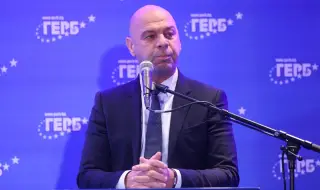
Plovdiv plans to build a centralized security system that will monitor key public spaces and recognize potentially dangerous situations as they develop. The concept was presented by Mayor Kostadin Dimitrov and the team that developed it, Nova TV reported.
The project envisages hundreds of cameras and various types of sensors to be connected to a common analytical platform. It should cover parks, city gardens, central areas, stops and busy intersections. In the transport section alone, 196 stops and 74 intersections are included.
The main goal is for the system not to serve solely for reviewing records after a crime or violation has been committed, but to analyze what is happening in real time and to issue a signal when a potential risk is detected.
According to the mayor, work on the concept began back in 2024 and is not a direct consequence of the recent serious criminal cases in the city.
„Back in 2024, we commissioned the development of a concept for prevention and analysis of risk areas in Plovdiv and the preparation of a system that will enable the city to be safer“, said Dimitrov.
It is planned that some of the already existing municipal cameras will be added to the new platform. The mayor gave an example of a newly built park, where 171 video surveillance devices are planned.
The information from the cameras and other sensors will be fed into a single system, which will process it and look for pre-defined signs of unusual or risky behavior.
The representative of the team that developed the concept, Georgi Kisyov, compared the model to the human body - the cameras and sensors will be its "eyes and ears", the analytical platform will act as the "brain", and the coordination center and security services will provide the response.
„Imagine a brain that is able to aggregate all this data in one place and analyze it. It is very important to emphasize - in real time“, explained Kisyov.
In addition to video cameras, the system will be able to use information from sound, temperature, humidity, air quality sensors and other indicators depending on the specific area.
When the system detects a potentially risky situation, the signal will be sent to a municipal coordination center. Employees there will assess whether intervention is necessary and whether the information should be transmitted to the Ministry of Internal Affairs.
It is planned that in certain cases the police will be able to access robotic cameras and track a specific event in real time.
Among the examples of situations that the system could recognize are abandoned luggage in a busy place, acts of vandalism, traffic violations and unusual behavior in parks and other public spaces.
The developers gave a specific example - a person running in a park in itself does not pose a risk. However, if the camera detects a person running away from another person and the pursuer is carrying an object recognizable as a potential weapon, the system could flag the situation for immediate inspection.
The presentation also discussed the serious criminal case on Youth Hill. The authors of the concept emphasized that it cannot be said whether such technology would change the outcome of a specific crime. According to them, however, the possibility of risky behavior being detected during the course of events increases the chance of timely intervention.
“It is precisely here and in such cases that it is important to be able to react in time and for the information to reach the law enforcement agencies in the fastest way“, Kisyov pointed out.
According to the developers, this is the main difference compared to traditional video surveillance - instead of the recordings being used mainly after the incident, the technology should help prevent it or at least respond more quickly.
The project's capabilities are not limited to serious crimes. The system can be used to detect vandalism at bus stops and other public infrastructure, unregulated waste disposal, traffic violations and excessive noise.
According to Dimitrov, previous experience with video surveillance shows that the mere presence of cameras can have a deterrent effect. He gave an example of a park and bus stops in the “Trakia“ area, where after the installation of cameras, vandalism has decreased.
The next step is to create a detailed map of the areas with increased risk in Plovdiv. The municipal police and the deputy mayor for security must determine the places where more incidents and violations have been registered over the years. Information will also be collected from educational institutions.
The priority areas will include large parks, the city center and other places with a high concentration of people or a history of violations.
Various power supply options have been developed for the deployment of the equipment - directly from the electrical grid, through the street lighting infrastructure and batteries, or with autonomous photovoltaic systems in more remote areas.
The cost of the project is yet to be clarified. The municipality will seek state funding and a partnership with the Ministry of Interior, and the system is expected to be built in stages.
The concept must be further refined before its implementation begins. However, the main idea is for Plovdiv to gradually move from traditional video surveillance, which mainly documents incidents that have already occurred, to a model capable of signaling danger the moment it arises.