The Ministry of Interior and the State Agency of National Security have launched a large-scale inspection of over 100 pharmacies and drug warehouses in 12 regions. The reason - it is being investigated whether expensive drugs for chronic and oncological diseases were reported as being dispensed to patients and paid for by the Health Insurance Fund, and according to suspicions, they remained available for resale or export.
It is assumed that the damages are in the millions of euros. However, so far, no names have been announced, no arrests have been made, the exact amount of the damage has been made, or the number of patients affected has been proven.
Who could actually organize such a scheme? Is there reason to suspect the involvement of medical personnel, pharmacies and drug stores, and what should the control systems have detected?
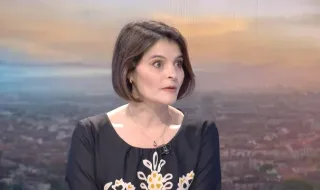
"Most likely, it is about the following - there is a patient who has been diagnosed, respectively, he must receive his treatment. This is done by prescribing him a prescription. Here comes the first red light. Which doctor prescribes an expensive medicine to someone, whether for a chronic illness or oncological disease, which this person could not receive? Then the question arises: is this person who is prescribed this expensive medicine really sick? Because if he is sick, the first thing he would want is to get his medicine and be treated,", commented in "This Morning", lawyer Dr. Maria Petrova – specialist in medical law.
„The second point is, if we assume that this person, in hypothesis one, is actually sick and does not receive his medication - then we are talking about dozens, probably hundreds of patients who are harmed and whose health suffers from this fact.
We come to the second hypothesis, in which it is possible - in order for the patient to receive some social benefits, either through TELK or in another way, for someone to write him a serious diagnosis, to prescribe him an expensive medication, which he does not need due to his health condition, and thus to do, in quotes, quite conditionally, a two-sided service“, she commented.
„One person continues to drain the social system, acting seriously ill and receiving a high rate of incapacity for work, and the other, now in combination with the relevant warehouses or pharmacies, can generate numerous prescriptions that can be manipulated“, she added Dr. Maria Petrova.
"As lawyer Petrova said, we certainly don't know exactly what the potential scheme is yet. But anyway, since there is a payment from the health fund, the contractual partners of the fund are medical institutions and pharmacies, i.e. there is no way this can happen without the participation of pharmacies. That's how it is. I just want to emphasize that these are certainly not all pharmacies and certainly not all pharmacists. Here, when the data comes out, we need to speak clearly – with names, with companies and so on, so as not to cast a stain on all colleagues who work conscientiously and fulfill their duties every day," commented master pharmacist Dimitar Marinov, chairman of the Management Board of the Bulgarian Pharmaceutical Union.
„I am also a patient of the health fund, I use medicine from the health fund and it is not cheap. I can't imagine going to a pharmacy and not being given the medicine or being given some other medicine. So this is probably more of a group of people who are fictitiously ill - probably. That's why I say, there are partly a lot more medical specialists there, because a pharmacist can't make people sick on documents. That's what doctors do and someone somewhere along the chain has created false documents. Everything is traceable, everything can be caught“, he pointed out.
“What they brought out from the National Agency for National Security, the facts are very scarce. It's like having to put together a puzzle of a thousand pieces and right now we have a hundred pieces on which we see light blue. And someone asks us: is it the sea, is it the sky? It is very difficult for us to say the specific steps, simply because no one has come forward with such information.
But again, within the framework of hypotheses, knowing how the process develops, first of all we allow the possibility of having a certain category of medical institutions or doctors who have “made sick” a certain group of patients, so that the need to prescribe the expensive medication can be felt”, commented lawyer Dr. Maria Petrova.
„From there, there is someone who manipulates the system. With the proviso that the system implies digital control at the moment, but not for everyone. We cannot say who is specifically guilty. We also have a presumption of innocence, the facts are still too scarce. But I assume that we are talking first of all about compiling documents with false content about the health status of individuals, i.e. fictitious diagnoses. From there, we are talking about computer fraud, because manipulating the electronic system in which you replace an expensive medication with one that is cheaper is exactly that. And the draining of the health fund – what society understands as draining the health fund – "It is a pure form of document fraud," she also pointed out.
In his words, he has "eyes wide open," and the winner is the wholesaler.
“Here we are talking about an inequality in control. Because if pharmacies are controlled at this moment, and the one who delivers to the pharmacy and has the right to export these products is not controlled in the same way, here perhaps we should ask the question of the reform-minded Ministry of Health and all other bodies that have powers of control: whether it is not right for them to think in this direction as well,“ commented lawyer Dr. Maria Petrova.