IPCC is an intergovernmental panel at the UN on climate change, in which they are represented national scientific communities. The meeting held in Sofia is very important. The reports of these scientific communities reflect, in the best possible way, all the knowledge in the world regarding climate change.
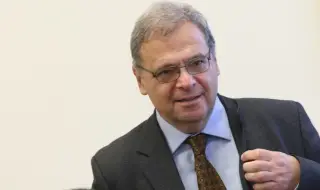
This is what Julian Popov said – ecologist and former Minister of Environment and Water before "Focus“.
IPCC reports change political and economic decisions at the global level, he stressed. "Industrial and infrastructural solutions, insurance activity, the behavior of many people, the direction of scientific research are changing," added Yulian Popov.
He noted that we are increasingly witnessing extreme weather events – heat waves, floods, fires, and therefore specific strategies for adaptation to these changes are needed.
"Adaptation is becoming more and more relevant because we have entered a period in which we see these extreme phenomena. Adaptation to climate change can range from global to very small, local solutions – for example, should we plant a tree, should we use lighter asphalt, should we make water bodies with a cooling effect in the cities, should we change the colors, should we put green roofs, which are good insulation, and in heavy rain slow down the wave and reduce the probability of floods”, Popov explained.
Cities consume a huge amount of electricity and concentrate an increasing part of the world's population. They become the so-called "hot islands“.
Strategies, approaches and solutions for dealing with climate change are many. They can be global, European, national, local, urban, explained the expert.
"We have a National Adaptation Strategy, which is very serious, we are working on its implementation. It is very important for cities to have comprehensive strategies and for them to be adopted at the local, local level”, emphasized Julian Popov.
Returning rivers to their natural state is an expensive project.
"We are exploring models of what can be done with the rivers, leaving the concrete but breaking up the flow of the water so that it does not increase the risk of flooding, but at the same time the water spills over the concrete bed, slow down and give birth to life in the concrete part. This is a study we are doing with different scientists. It is very important that any such action be based on serious models and use the knowledge and advice of serious scientists – we have such”, assured Popov.
The Black Sea is under complex pressure, said the former Minister of Environment and Water. "There is constant pressure from the rivers that flow into it, which are saturated with various ingredients from industrial agriculture, fertilizers that increase growth in the water. This, together with the increase in water temperature, leads to increased bloom and to the reduction of oxygen in the water. This is also a serious problem," Popov explained.
A scientific conference dedicated to climate risks for the Black Sea and the Black Sea region marks the beginning of systematic studies of the climate state of the Black Sea, the expert said. The Black Sea is the largest dead body of water in the world. It is a deep sea and 9/10 of it is saturated with hydrogen sulphide – poisonous and incendiary gas. "It is supported downward by an intermediate cold layer, which, as a result of climate change, is beginning to thin and in some places is beginning to tear. We don't yet know what will happen if it ruptures seriously. If it ruptures and starts to come up, it will be catastrophic,”, he warned.
According to Julian Popov, we can reduce the effects of climate change and slow it down by stopping the use of fossil fuels. "
This should happen in the second half of the 21st century. If this is achieved, we have a good chance of turning things around, or at least keeping them in some state that can be managed and adapted to. In terms of adaptation, we have great chances, but the whole world must be mobilized politically, financially, and we must start thinking at the local level as well. Cities, rivers, afforestation are key, he explained.
Source: www.focus-news.net