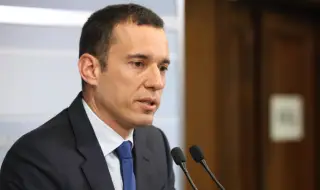
Krasimir Georgiev (Krasyo Cherniya) "is one of the people who have influence on the municipal council and the decisions in which direction they are taken". This was stated in an interview with “Free Europe” by the mayor of Sofia Vasil Terziev.
Terziev is categorical that he does not have “any economic majority”. “And I don't plan to have”, he said.
Asked to comment on the report on the change of directors of municipal companies, the mayor of Sofia stated the following: “For me (the report on the change of directors of municipal companies) was scandalous and continues to be so, but in the end there are people elected as leaders of these companies”.
Terziev explains that the municipal council in Sofia “is becoming increasingly fragmented and it is increasingly difficult to make any decision”.
“I have a problem with aggressively incurring expenses, such as for salaries in transport and other areas, which have long-term repercussions. It is not clear where the money will come from to sustain this thing over time”, the mayor admits. He recalls that the main problem in Sofia's public transport is the shortage of drivers. “It's not the lack of accountants. It's not the lack of other staff. It's not the lack of drivers in the metro”, Terziev commented, motivating his thesis that the money in the “kalpak” companies should not be increased. His proposal was to increase it by 100 leva. administration salaries, so that there is more money for drivers and vatmans.
According to the capital's mayor, “garbage and transport are the easiest ways to overthrow a mayor, to destabilize a city”.
“I have an extremely big problem with projects being made for significantly higher prices than something is worth”, said Terziev and added: “I was not part of the money flow to tell you who gave what to whom. But we see the consequences when we work one way and another way”.
“Something I'm not okay with is our money not going where it was intended”, said Terziev.
According to him, the root of the corruption problem lies in old models of draining public resources through public procurement.
“Certain public procurements are carried out with convenient technical specifications, certain companies are favored, convenient people are appointed who make decisions about which company to choose”. According to Terziev, these schemes have not disappeared, but simply “the players change, but the faces change over the years, the system remains the same”.