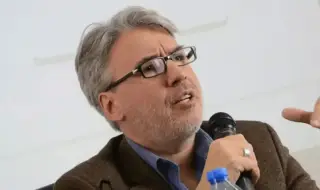
About the vacations of the deputies, the fires, the opposition and the actions of Vice President Iliyana Yotova… Prof. Dr. Rosen Stoyanov, Director of Political Analysis and Forecasts at “Gallup International Balkan“, spoke to FACTI.
- Prof. Stoyanov, over 200 fires are burning in Bulgaria – literally, but the deputies went on vacation. One would say that life goes on, but is that so…
- Whether they deserved a vacation is a question, but they are entitled to it by law… However, with a regular government in place, we should give credit to its actions in controlling this natural disaster and the resulting crisis. Let's not forget the diametrically opposite crisis with the potential consequences of the fires, expected floods, problems with water supply, the quality of drinking water, and even the water shortage itself, in a large part of Bulgarian settlements - all problems with a long history. Naturally, in the absence of effective and sustainable solutions to problems in this range, some doubt remains within the framework of two hypotheses - deliberate inaction, from which someone benefits, which is still solvable, or the more terrible - that's all we can do.
- Why do fires become the main topic at this time every year, and we don't take real actions to make us more prepared. Don't we learn from our mistakes…
- Maybe because it's not about mistakes made and realized,
but about some different private, individual, political or other interests.
The existence of a wide range of problems of the most different order in this area, including the most visible and socially significant ones such as the occurrence of fires, are clearly related to poorly resourced sector-specific policies, a certain deficit of professional, expert, preventive work and, last but not least, political will. The question is not whether or not we are prepared to fight fires, but to prevent them. Let's still mention human negligence, carelessness, criminal behavior…
- If we have to summarize the life of the “Zhelyazkov“ cabinet so far, what will we connect it with outside of Schengen and the adoption of the euro…
- So far, the feeling of stability of this government has prevailed. Going through a series of no-confidence votes has failed to generate additional dissatisfaction among the broad masses of people, outside of the National Assembly. The policies implemented, although criticized by the opposition, are being implemented slowly, with difficulty and with certain problems, but the “Zhelyazkov” cabinet manages to implement its policies, supported by a majority in parliament. This government is well received in Europe and by European institutions, for which, of course, the important fact that after the vacuum of political instability in the last few years, this cabinet is regular plays a major role.
- The euro was a divisive topic, in which President Rumen Radev also got involved. But it is now in the past. The head of state is approaching the end of his term. Are you already seeing applications from future candidates for the campaign?
- No, this topic has not passed. The government's explanatory communication campaign is still ahead, we have difficult tasks to solve regarding the factual, technical and socially conditioned transition to a new economic, financial, and hence political situation.
But, yes - for Mr. Radev, this topic is probably over, but with a joyless result - a strategic loss.
Around Radev, who is ending his last term, in recent years there have been particularly strange fluctuations related to politics - due to the fact that the head of state is not allowed, to put it mildly, to carry out party activities. But through people influenced, motivated and supported by his circle, more than one or two political projects have been created, because during the caretaker governments the state was manually managed by “Dondukov” 2. There was even talk of a radical change in the socio-political structure of the state towards a presidential republic. The end result of these (and not only) actions, ideas, interventions and policies is extremely disappointing for some, but also especially pleasing for others.
- Vice President Iliyana Yotova pardoned Desislava Ivancheva 10 months before the end of her sentence. Was this just an administrative move or is there something else behind it?
- In order to be sure what exactly Ms. Yotova did, a deep factual analysis of all her similar acts must be carried out - when, towards whom and with what public response she acted. When asked "why", she is clearly not required to give an explanation by law. But it would be interesting for society to have information on the basis of which conclusions could be drawn as to whether she acted in certain cases campaigning, deliberately and purposefully or simply conscientiously and legally fulfilled her official duties delegated by the president. Undoubtedly, however, in the situation of an increasingly declining personal rating, with the approaching presidential elections at the end of 2026, with the establishment of a relatively stable regular government in the person of the “Zhelyazkov“ cabinet, it suggests the possibility of a wide range of political requests related to the presidential candidate's campaign.
- Can we currently clearly distinguish who is the opposition in parliament, since according to Boyko Borisov without the MRF – New Beginning nothing can happen in the country. We have something like a ruling opposition. What kind of political phenomenon is this…
- There is no opposition in this parliament. And no, such a statement is not absurd, although it sounds paradoxical, it is valid. In the current parliament, the opposition has the following diagnosis – the largest coalition PP-DB is against everyone and everyone, the second largest, outside the government – “Vazrazhdane“ is against Europe and with Moscow, the fourth, which is de jure outside the ruling coalition – “DPS-New Beginning“, supports the government, Dogan's APS has almost no legitimacy outside the framework of the previous vote, there remains a shamanic formation, in the person of “Velichie“. The only political force that, although with certain reservations, we can define as opposition is “Mech“, which with its 11 members of parliament simply cannot, and do not want to, change anything. None of the above gives us grounds to be particularly optimistic about an existing alternative to the current government within the framework of the current Parliament.
- A Gallup survey shows that “DPS-New Beginning“ is the second political force. Does this mean that the party has already gathered... The survey shows that they would be the second political force if the elections were held now. Of course, my fellow sociologists can comment on this data as an expert, but certainly as a result of this data, the spirits of those who define themselves as a "democratic community" were stirred up for a day or two. These results do not show us a historical, epochal event, but a regularity, a consequence of the assimilation of the electoral base of those supporting Dogan's MRF by Peevski's faction. For about a year, the votes around MRF were concentrated in the center around "New Beginning". Let's not forget, however, that the potential of MRF was achieved back in the parliamentary elections for the 50th National Assembly in June 2024, when this party was the second political force with 47 members of parliament, and not in sociology, but on the political terrain. In fact, sociology shows that to date, the MRF has managed to unite the majority of its supporters in one way or another into a single center.
- And against this backdrop, we saw a declaration from Ahmed Dogan that he will create a new party. What do you expect to come of this?
- A particularly difficult project to implement. There are several reasons for this, but here are the main ones. Dogan is in the unenviable position of people who tried years ago to create an alternative to himself, such as Güner Tahir with the National Movement for Rights and Freedoms (NDPS) from 1998, Kasim Dahl and Korman Ismailov and their project People's Party “Freedom and Dignity“ from 2012, Lutvi Mestan and his “Democrats for Responsibility, Freedom and Tolerance“ from 2016. On the other hand, in the first quarter of the 21st century, the "preservation" of the so-called "ethnic peace" finds less and less grounds in the face of essentially illegal ethnic parties. And whether Dogan will manage to create a political force with the potential to enter the next parliament is a question, with a not so categorical positive answer for now at least.
- Rosen Zhelyazkov's cabinet went through several votes of no confidence. Has this concept of "vote of no confidence" worn off, or is it just a convenient move for the opposition to remind itself of itself?
- This main tool for serious and categorical opposition activity is devaluing its value, as a result of a series of successful "attempts" at democracy by political formations that otherwise remain outside the media and public interest, only for their personal publicity. The votes are on certain topics, as a result of an unsuccessful vote on a given topic, such a vote cannot be included in the next six months, which in turn provides the government with an additional mandate and carte blanche to act on these topics. It remains to be seen whether and which of the so-called opposition parties have the potential - expert, human and resource - to present themselves as an alternative for governing the country, who is interested in such indirect support for the government and who, in their inability to create something substantial, is playing with democratic procedures.
- When we talk about a vote of no confidence, do we see an alternative from the opposition behind it?
- When we talk about an alternative, we always talk about the status quo. The big problem of the current political situation is that we cannot talk about the “status quo“ in its pure form, due to support from opposition factions, due to the extreme ideological heterogeneity of the political entities in the ruling coalition, and last but not least due to the lack of a single “anti“ body defining the status quo itself. If we talk about an alternative to governance available within this National Assembly - at the moment, such a thing is definitely not available, not even possible. But this governance has its alternative, and it is in the huge number of non-voters, whose opinion is not covered by any sociological survey. An alternative is always found, but without leadership, ideology, party organizations, structures and field work, it is impossible to even make a request that someone would consider serious and promising, to recognize the communicated values and diversity and subsequently delegate their full trust through their vote.