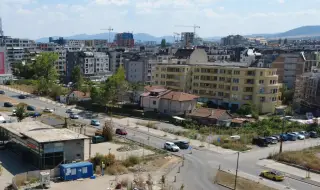
Property and Bulgarian are directly related words. Folk psychology, as they say. But there is something else. If you want to anger (make angry) a Bulgarian, raise his property tax. Because he, she, the family, the family wants to have property - houses, apartments, cars. Who gets them and how is another topic, but the important thing is to have property. An apartment in Sofia - prestigious, expensive, but to have it. And that you don't know where to park, that there is no place to enroll your child in kindergarten, these are details. They have it in Sofia, and by the sea it's not bad - Varna, Burgas, Albena, Slanchaka, Nessebar, Sozopol, etc.
The Law The regime of taxation of real estate tax is regulated in Art. 10 - Art. 28 of the Law on Local Taxes and Fees.
The real estate tax is levied on buildings and independent objects in buildings located on the territory of the country, as well as on land located within the construction boundaries of settlements and settlement formations, and on land outside them, which, according to a detailed development plan, have the purpose under Art. 8, item 1 of the Spatial Planning Act (for residential, public service, production, warehouse, resort, villa, sports and entertainment functions, for green areas, for decorative water systems, for traffic and transport, including bicycle paths and for the movement of people with disabilities, etc.) and after a change in the purpose of the land, when this is required by a special law.
Tax is not levied
on land occupied by streets, roads from the republican and municipal road networks and the railway network to the restrictive construction lines;
on land occupied by water bodies, state and municipal property;
on agricultural land and forests, with the exception of built-up land - for the actual built-up area and its adjacent terrain;
on real estate with a tax assessment of up to 1680 BGN inclusive.
Tax Taxable persons
Taxable persons are:
the owners of taxable real estate;
in the case of an established real right of use, the user is liable for tax;
in the case of a concession, the concessionaire is liable for tax;
the owner of a building built on state or municipal land is also liable for tax for this property or the relevant part thereof;
for property - state or municipal property, the person to whom the property is provided for management is liable for tax.
Tax base
The tax base for taxation of residential and non-residential properties of citizens is the tax assessment of the property, determined according to the norms specified in the annex to the law. The tax base for residential properties of enterprises is determined in the same way.
The tax base for taxation of non-residential properties of enterprises is the higher of their accounting value and the tax assessment according to the annex to the law.
How is the tax assessment formed?
The tax assessment of real estate is determined according to the norms specified in the annex to the law, depending on the type of property, location, area, construction and obsolescence and is communicated to the taxable persons.
Tax rates
The rate of the real estate tax is determined by an ordinance of the municipal council within the limits of 0.1 and 4.5 per thousand on the tax assessment of the real estate.
Payment of the tax
The real estate tax is paid in two equal installments within the following deadlines:
until June 30; and
until October 31 of the year for which it is due.
Those who prepay by April 30 for the entire year will receive a 5 percent discount on the amount of tax due.
And the IMF will be the perfect excuse
A few days ago, a team from the International Monetary Fund visited Bulgaria. This is not something unusual, on the contrary. Now they came in connection with the adoption of the euro from January 1, 2026, to tell us how good this was. We will see after January 1 and then we will decide whether they were right. The IMF recommended that we reduce public spending, to “tighten our belts“, not to increase salaries in the public sector, etc., so as not to get out of the 3% deficit. And in the meantime, they gave the idea that the budget could be filled by raising property taxes. Well, by the way, they mentioned it. The authorities immediately said that they had no such intention. They have no intention now, but tomorrow… When it becomes clear that the budget has been gutted, won't we hear how the property tax will increase? Won't they remind us that this was also a recommendation of the IMF, that the authorities initially had no intention, but in order not to become like Greece, it is better to raise taxes. Fear and excuses to fill the budget. Because that is what the IMF said.
The Bulgarian's Problem
If you threaten a German with raising his property tax, only a fraction of the people will complain. Why? Because Germany is home to more than 83 million people, and less than half of them are property owners. According to data from the European Statistical Office Eurostat from 2022, 47% of German households own their own property, while the remaining 53% live in rented accommodation.
By this indicator, Germany is at the bottom of the ranking among European countries. Only Switzerland has even lower indicators. The data show that the most homeowners are in Romania, Slovakia and Hungary, where over 90% of the population own their own house or apartment. In Bulgaria, nearly 85% of people live in their own home, according to Eurostat data from 2020. By raising the property tax, you are affecting 85% of Bulgarians. You understand what this means for the political party that did it… But somehow it seems inevitable because the IMF said so.
The question is which party will turn this into action.