Comment by Emilia Milcheva:
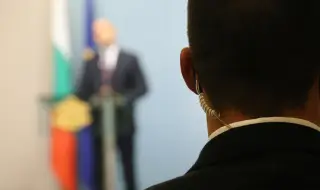
When Bulgarian politicians cut off their tail, known as the National Security Service (NSS), then visible signs of normality have appeared. For now, however, they continue to enjoy the luxury and privileges of being guarded and transported by the employees of a militarized structure, for which taxpayers pay nearly 100 million leva in 2025.
So when the MRF-New Beginning asks President Rumen Radev about his motorcade of 7 cars in Varna, and he asks why there are MPs who are guarded by both the NSO and the gendarmerie, they simply provide the dose of dramatization and demonstration of force in the plot “How the atos are kicked”. The essential question is how long the NSO will exist as UBO 2.0, will it not be demilitarized and transformed into a structure subordinate to the parliament, the Ministry of Internal Affairs or another institution, with a limitation on the number of protected persons and/or those with the right to specialized transport. Among the latter is now, for some reason, the mayor of Sofia.
The president knows. Why is he asking?
The NSO is a service to the president, so Radev doesn't need to ask - he can name deputies and suggest why they have security guards who travel everywhere with them. According to the NSO law, the president exercises general leadership and control over the service, approves the number and structure, appoints its chief - and can refuse the government to dismiss him, as happened in 2022 and Major General Emil Tonev retained his post.
Reserved and not so wasteful in his first term, in his second the president showed a taste for ostentation, symbols of power and the comforts that go with them. When the MP from the DPS-New Beginning Kalin Stoyanov pointed his finger at him for driving around Varna “with a motorcade of four limousines, two jeeps and one minibus” on segregated boulevards, this is truly a show of force.
But what Stoyanov's boss - his party leader Delyan Peevski - does is no different.
The leaders of the MRF are still under “death threat”
For years, Peevski, who has been sanctioned for corruption by the US and the UK, has been using the services of the NSO - even before he became the current phenomenon (as one of his “fathers” in politics, Ahmed Dogan, who was also a client of the NSO, called him). Over the years, journalists and politicians have often tried to find out how much Dogan's security costs, and later Peevski's, and what these threats are that force the state guards to protect them like Saudi princes. All inquiries hit a dead end.
In 2013, former intelligence chief Dimo Gyaurov announced in media appearances that 2.5 million leva per year was spent on Dogan's security. According to earlier information, the NSO had been guarding the leader of the MRF since 2005, and 24 security guards were watching over his safety. At that time, even the properties that Ahmed Dogan inhabited were like private enclaves. But as soon as Peevski toppled him from the throne, this privilege was put to an end (and apparently the threats).
How do politicians ensure the loyalty of the NSO
The costs of protecting a specific person, as well as who the person is, are not questions that the NSO, which is unconditionally subordinate and loyal to the government, can answer. Politicians have repeatedly accused the service of making up threats in order to have a formal basis to provide security for certain individuals. The commission that makes these decisions consists of the head of the National Security Service, the chairman of the State Agency for National Security (SANS) and the Secretary General of the Ministry of Interior. General Tonev is the president's choice, and Denyo Denev, acting head of the State Security Service, was identified by "Continuing the Change" as "Peevski's favorite". There is no third party. The reason the Ministry of Interior has been without a Secretary General for nearly 18 months is that Rumen Radev does not sign the decree appointing proposals from the government for the position.
But regardless of the composition of the commission, Dogan, and later Peevski, were almost invariably among the top priorities. It turns out that there has been a serious threat against them for many years. When the co-chairman of "Yes, Bulgaria" Ivaylo Mirchev says that “a deputy uses the highest class armored car Mercedes S680 Guard, along with gendarmerie and berets”, he asks what imposes the highest level of security on the NSO. According to him, there is a fabricated signal to the National Security Agency, supposedly from Western partner services, that a detachment of the Russian GRU has infiltrated Bulgaria with the aim of assassinating party leaders who are supporting Ukraine in the war with Russia. (That is, if the threat is realized, Bulgarian support for Ukraine will greatly ease?) The NSO should answer Mirchev's questions because he is a deputy. But this does not mean that the public will learn them.
Demilitarization, then transformation
If an NSO employee discloses information learned in the course of his or her service, he or she faces a military prosecution and a military court. This is how the political class protects the loyalty of the NSO, along with salaries, social benefits, compensation, and retirement conditions.
In the modern world, when security risks are real and multifaceted, threat assessment and monitoring should be a tool for protection, not a convenient pretext for spending and a display of power. The specialized vehicles worth nearly 7 million leva, which the NSO has announced in the Program for Priority Strategic Investment Projects with National Financing for 2025-2028, look more like luxury toys for the authorities and a symbol of the “power of the state” than as a means of real protection.
Concept for the future role of the NSO
Instead of political banter and exchanges of lines, there is a need for a concept for the future role of the NSO, in the context of other special services - and national security in general. Bulgaria is not a rich country to spend a hundred million a year on servicing the authorities and their whims, while being opaque to the public.