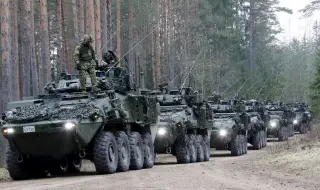
Europe Considers the Unthinkable Against Russia – to strike back, including through cyberattacks, writes POLITICO.
Russia has been using drones and its own agents to attack NATO countries, and now Europe is doing something that seemed unthinkable just a few years ago: planning how to respond.
According to two senior European government officials and three EU diplomats, the possibility of offensive cyber operations against Russia is currently being discussed, as is the possibility of conducting surprise NATO military exercises close to the Russian border.
“Europe and the Alliance as a whole should ask themselves how long we are prepared to tolerate this kind of hybrid warfare... [and] whether we should consider becoming more active in this area ourselves,“ German Defense Secretary Florian Hahn told Welt TV last week.
Hybrid attacks are nothing new. In recent years, Russia has sent assassins against political enemies in Britain, been accused of blowing up weapons depots, tried to destabilize the EU by funding far-right political parties, engaged in a social media war and tried to influence elections in countries such as Romania and Moldova.
But the scale and frequency of the current attacks are unprecedented. Between January and July, more than 110 sabotage and attempted attacks were carried out in Europe, mainly in Poland and France, by people linked to Moscow.
Europe does not want war with a nuclear-armed Russia, and so it must figure out how to respond in a way that deters Moscow but does not cross any Kremlin red lines that could lead to open war.
Sweden’s defense chief said that “we can no longer afford to be afraid.” Frequent Russian provocations are changing the tone in European capitals. Despite the increasingly heated rhetoric, the question of what a more decisive response would entail remains open. Part of this is due to the difference between Moscow and Brussels. The Russians are not shy about bending the rules, while Europe is not.
In practice, countries could use cyber methods to attack systems critical to Russia’s military efforts. Europe also needs to figure out how to respond to Russia’s massive disinformation campaigns on its own.
NATO, for its part, is a defensive organization and therefore wary of offensive operations. “Asymmetric responses are an important part of the conversation,” said one NATO diplomat, but “we will not stick to the same tactics as Russia.” Instead, the alliance should prioritize displays of force that illustrate power and unity. “More must certainly be done on hybrid attacks,” said a senior NATO diplomat.
One thing is certain: as Putin intensifies his campaign to destabilize the EU and NATO, European capitals are considering how to respond.