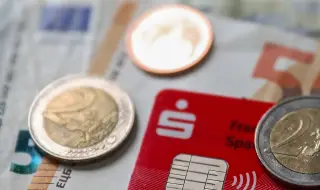
Bulgaria became the 21st member of the eurozone today, despite opposition from half of voters, leaving only a handful of countries in the 27-member European Union that have not yet adopted the currency.
Although Public Support for the Euro is High in Some of the Countries in Question, Including Hungary, Eurosceptic Parties in Governing Coalitions and National Parliaments Are Likely to Resist Further Expansion of the Eurozone for the Foreseeable Future. Here are the remaining countries.
HUNGARY
Around 72% of Hungarians support adopting the euro, according to a Eurobarometer survey conducted between October and November last year. This is the highest level of support among EU countries that have not adopted the euro, despite Prime Minister Viktor Orbán's euroscepticism.
Opposition leader Péter Magyar has said he will steer the country towards adopting the euro if his centre-right party wins the election. However, Hungary has the highest debt in the EU as a share of output outside the eurozone, while its deficit cuts from the COVID-19 pandemic have stalled amid Orbán's heavy campaign spending.
Even if Hungary meets all the entry criteria, joining the eurozone would not be possible without a parliamentary majority, as Orbán, who opposes deeper EU integration, has enshrined the forint as Hungary's national currency in the constitution.
ROMANIA
The country is struggling to reduce the EU's largest budget deficit, meaning it could take several years to stabilize its finances before it has a realistic prospect of joining the eurozone.
Public support for the euro is 59%, a "Eurobarometer" survey showed. However, with Romania facing high inflation, austerity measures and an active far-right waiting before elections in 2028, the topic remains out of the public discussion.
POLAND
In Poland, where public support for the euro is 45%, Finance Minister Andrzej Domanski said that Warsaw is not working on adopting the euro currency and that the EU's largest economy outside the eurozone is "happy to have its own currency".
Jarosław Kaczyński, leader of the main opposition party "PiS", said that anyone who seeks to introduce the euro is "a mortal enemy of Poland".
CZECH REPUBLIC
Czech public support for the euro is 30% according to the "Eurobarometer", and the government has no plans to take steps to adopt it. Czech national debt levels are still much lower than in "most eurozone countries", so for many, entry raises the risk of assuming responsibility for more indebted countries.
Prime Minister Andrej Babis was pro-Euro as a businessman, as he was at the beginning of his political career, but has since moved his party towards nationally conservative and Eurosceptic positions. He is now proposing to enshrine the Czech crown in the constitution.
SWEDEN
Only one small party openly advocates joining the eurozone, while the populist Sweden Democrats - the second-largest parliamentary group whose support is crucial for the right-wing minority government - are opposed, meaning any debate about joining is likely to remain in the realm of theory.
Sweden joined the EU in 1995, but a referendum in 2003 rejected the euro by a majority of 56% to 42%. Public support for the euro is 39%, according to a "Eurobarometer" survey, with opposition to adoption falling steadily from the 80% level reached after the eurozone debt crisis of 2012-2013.
DENMARK
Denmark, which joined the EU in 1973, is the only member state of the bloc with the right to opt out of the euro, meaning it has the right to remain outside the currency zone even when all entry criteria are met. Public support for adopting the euro there is 33%.
Translated from English by Ivo Tasev, BTA