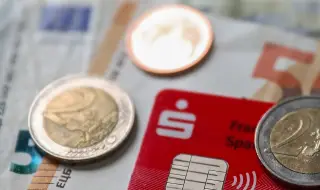
On January 1, Bulgaria became the 21st member of the eurozone, replacing the 145-year-old currency, the leva, with the euro. In Sofia and Brussels, this event was celebrated as another step in the economic and political integration of the European Union. What has gone largely unnoticed, however, is the extent to which Bulgaria's adoption of the euro represents a strategic setback for the Kremlin, writes "Foreign Policy" magazine. The American publication published an article by Desi Zagorcheva, associate professor at "Guardia" College and senior fellow in digital disinformation and media literacy at New York University.
After years of relentless efforts to prevent Sofia from joining the eurozone, Moscow has failed to prevent the decision that cements Bulgaria’s place deeper and more irreversibly in the European project. The currency change not only exposed the limitations of Russia’s hybrid tactics but also reduced its remaining influence in the country.
Russia has never fully embraced Bulgaria’s strategic reorientation. Instead, it continues to treat Bulgaria as contested territory, relying on historical, cultural, religious, and economic ties—including energy dependence—to keep the country in what Russia perceives as its sphere of influence. Part of the Kremlin’s influence is exerted through the Bulgarian Orthodox Church (BOC), which maintains close ties with the Russian Orthodox Church (ROC), notes "Foreign Policy". Moscow has long used it as an instrument of "soft power", supporting ideas of Slavic and Orthodox brotherhood. For most of its modern history, Sofia was Russia's most loyal European ally, which allowed Moscow to continue to exert its influence even after its entry into Western institutions, including NATO and the EU.
From the Kremlin's perspective, the expansion of the eurozone is not a neutral economic process. For Moscow, any deepening of EU integration limits its ability to exploit bilateral dependencies, exert selective pressure, create divisions within the bloc, and cultivate gray areas of influence on the EU's eastern flank. Countries that adopt the euro become more closely linked to each other economically, financially, and politically, which reduces the possibilities for external manipulation.
Analysts had good reason to doubt that Sofia would complete the last two steps of EU integration, namely joining the Schengen area of free travel and the eurozone. Although Bulgaria has been an EU member since 2007, it continues to struggle with high inflation and corruption, the analysis also states.
Although Bulgaria and Croatia entered the European Monetary Mechanism - the mandatory two-year transitional period before adopting the euro - at the same time in July 2020, their trajectories soon diverged. Croatia advanced largely on schedule and adopted the euro in 2023. Bulgaria, on the other hand, was postponing its target date before finally joining in 2026.
These delays were not just technical. They were also driven by growing political and public doubts about deeper EU integration - a wave of resistance that was actively fueled by influence operations linked to Russia and Bulgarian proxies supporting the Kremlin. Bulgaria’s slow path to adopting the euro has thus become a visible indicator of Russia’s ability to obstruct, if not completely, EU integration.
In the run-up to the euro’s adoption, Moscow relied on a familiar set of tools for interference.
First, Russian-linked individuals conducted massive disinformation campaigns to sway public opinion against the euro. Russia used covert financial networks to spend tens of millions of euros on propaganda and interference in Bulgaria. Social media accounts linked to Russia or its Bulgarian proxies, as well as sympathetic mainstream media outlets, spread alarmist and often patently false claims, according to the "Foreign Policy".
These false claims included the idea that adopting the euro would lead to runaway inflation, confiscate citizens’ savings, strip Bulgaria of its national identity, and subject the country to Brussels’ dictates. This contributed to deepening the division in society over the issue of adopting the euro and to a decline in public support.
Second, openly pro-Russian forces in Bulgaria, most notably the extreme nationalist "Vazrazhdane" party, have echoed and legitimized these claims. "Vazrazhdane", which has a formal cooperation agreement with Russian President Vladimir Putin's "United Russia" party, has become the most visible domestic opponent of euro adoption.
The party has organized anti-European rallies and protests, some of which have waved Russian flags. In February last year, members of the party stormed the EU mission in Sofia, throwing fireworks, red paint, and Molotov cocktails at the building and setting fire to its front door. "Vazrazhdane" party leaders repeatedly warned of an economic collapse similar to that experienced by Greece during the euro crisis, despite post-crisis eurozone reforms and Bulgaria’s significantly different fiscal position.
Vazrazhdane MPs spread conspiracy theories, including claims that Brussels planned to confiscate Bulgarians’ savings and that the confiscated funds would be used for military projects.
Third, these efforts were part of a broader strategy to undermine institutions. By questioning the motives and competence of European institutions and of Bulgaria’s ruling elites themselves, the Russia-linked campaigns sought to deepen cynicism, polarize society, and weaken trust in the democratic process.
Despite this strong and sustained pressure, Bulgaria’s pro-European parliamentary majority ultimately achieved its goal. Successive governments, led by the strongly pro-European and anti-corruption coalition "Continuing Change - Democratic Bulgaria", have completed the necessary legal and technical steps to adopt the euro. Key institutions have resisted attempts to politicize or derail the process.
Bulgaria's entry into the eurozone reminds us that hybrid intervention, while powerful and disruptive, does not necessarily determine outcomes - especially when there is political will and institutional continuity, concludes Desi Zagorcheva.
However, this is unlikely to mark the end of the struggle. Rather, the Kremlin's focus on Bulgaria may intensify in the coming months. The country is expected to hold another early election later this year, which will open up new opportunities for foreign influence and domestic destabilization, warns Zagorcheva. At the same time, pro-Russian forces such as "Vazrazhdane" will try to exploit any short-term difficulties associated with the transition to the euro - such as price adjustments, administrative difficulties and public confusion - to present them as confirmation of their warnings and to blame the EU, she adds.
In this sense, Bulgaria's adoption of the euro is not only a political success, but also a strategic test. Whether it strengthens public confidence in European integration or becomes another battlefield for disinformation will depend on how effectively the Bulgarian government and EU institutions manage the transition and communicate its benefits. For now, however, January 1 was a clear setback for Moscow's ambitions to divide and weaken the EU. It is a signal that the EU's pull remains enormous, despite its challenges.