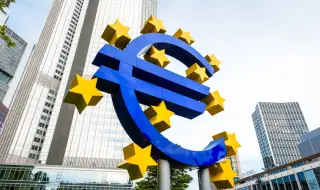
The European Central Bank (ECB) is expected to maintain the level of key interest rates in the eurozone at the institution's second-day meeting, analysts predict, amid weakening inflationary pressures in the eurozone. The decision will be announced later today and will be historic for Bulgaria - for the first time our country officially participates in the decision-making process in the ECB as a full member of the monetary union. The announcement of the decision will be followed by the regular press conference of ECB President Christine Lagarde, BTA reported.
Bulgaria joined the monetary union on January 1, 2026, and the Governor of the Bulgarian National Bank Dimitar Radev has already taken his place on the ECB's Governing Council. This comes after he participated in the meeting as an observer for the first time since September last year.
Preliminary Eurostat data for January showed that inflation in the euro area slowed to 1.7 percent - the lowest level since September 2024, mainly due to lower energy prices. Core inflation, which excludes highly volatile categories such as energy and food, also fell slightly - to 2.2 percent. Analysts say this combination of indicators does not suggest a change in interest rate policy anytime soon.
The rates at the December meeting were left unchanged for the fourth time in a row at levels of 2 percent for the deposit rate (the main interest rate for the eurozone, received by commercial banks when they deposit funds overnight with the central bank), 2.15 percent for the main refinancing operations (the interest rate paid by banks when they borrow funds from the ECB for a period of one week) and 2.40 percent for the interest rate on the marginal lending facility, at which banks can borrow funds from the ECB overnight. The Frankfurt-based monetary institution cut its key interest rates by a total of two percentage points until June 2025 from a historic high of 4 percent reached in 2023 amid rising inflation.
Commenting ahead of the meeting, Paul Makel, head of global currency research at HSBC, noted: “ECB President Lagarde is likely to stress that there is no exchange rate target, but may hint at how US administration policies could create a stronger euro“. He added that the strength of the euro is expected to be one of the central themes of the policy meeting.
Meckel's forecast comes as the euro hit its highest level since mid-2021 at $1.2049 in late January 2026.
In an analysis published earlier this week, ING economists said recent movements in currency markets and falling energy prices were creating a more favorable environment for the ECB ahead of the meeting. They said some easing in currency dynamics and falling energy prices were reducing short-term pressure on monetary policy, although heightened volatility in recent weeks highlighted the need for a cautious approach. The analysis noted that the tone of today's press conference could provide indications of the ECB's readiness to react to changing conditions in the coming months.
A “Reuters“ poll conducted in December showed that all participating economists expect the ECB's deposit rate to remain at 2 percent, with the majority of them not foreseeing changes until at least mid-2026, and according to many - until the end of 2026.
The ECB's Governing Council includes the six members of the Executive Board and the governors of the national central banks of the euro area. With the accession of Bulgaria, the number of national banks in the Council became 21, with the governors' voting rights being exercised through a rotation system. Even when they do not vote at a specific meeting, all governors participate fully in the discussions and decision-making.