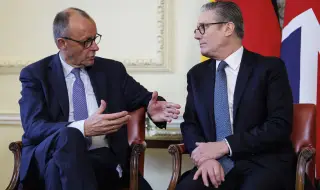
German Chancellor Friedrich Merz today welcomed the agreement between the United States and Iran to cease fire and open the Strait of Hormuz, DPA reported, BTA reported.
“The goal now is to negotiate a lasting end to the war. We are working closely with our partners on this issue“, Merz wrote in Ex.
The Chancellor also thanked Pakistan for mediating the agreement. According to him, the negotiations will protect the Iranian civilian population, guarantee security in the region and could prevent a global energy crisis.
The German government “supports these diplomatic efforts“, Merz said. Germany can contribute to ensuring free passage through the Strait of Hormuz, he added.
“Finally, good news in politics! I welcome the decision of the warring parties to agree on a ceasefire in the Iran conflict“, wrote German Foreign Minister Johann Wadeful in an article in Ex. Wadeful also thanked everyone who supported the agreement and in particular the mediator – Pakistan.
“This must be a decisive step towards lasting peace, as the consequences of continuing the war would be immeasurable“, he said.
Germany will do everything it can to support this diplomatic approach, Wadeful added.
British Prime Minister Keir Starmer will travel to the Middle East to talk to leaders of Gulf partner countries to keep the Strait of Hormuz open permanently after the two-week ceasefire announced last night between the United States and Iran expires, Reuters reported, citing the British Prime Minister's Office, BTA reported.
"I welcome the ceasefire agreement, which is a moment of relief for the region and for the world," the prime minister said.
US President Donald Trump said last night that he had agreed to stop "bombing and attacks on Iran for a period of two weeks".
Earlier yesterday, the American head of state threatened in a post on his social platform "Truth Social" that "an entire civilization will perish" if Tehran does not agree to an agreement under which the Strait of Hormuz will be opened.
The strategic waterway was blocked by Iran in response to the US-Israeli military operation against Tehran that began on February 28.