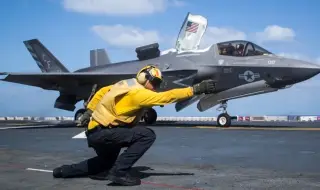
The US and its NATO allies are starting their annual BALTOPS naval exercises in the Baltic Sea this week, albeit on a smaller scale than last year, "Reuters" reports.
The maneuvers, which have been held annually since 1971, will bring together about 20 ships from 15 countries and nearly 6,000 servicemen - roughly half the size of the previous edition. Military officials said the smaller scale was a result of Western naval forces' ongoing operational commitments in other regions, including the Strait of Hormuz and the Arctic, rather than a weakening commitment to the alliance.
The US-led exercise will take place between June 4 and 20 and will be the largest naval exercise in the Baltic Sea this year. Washington will participate with the flagship "Mount Whitney" despite months of criticism of NATO by President Donald Trump and plans to reduce US commitments to the alliance.
German Rear Admiral Stefan Haisch said that while the exercise was not planned as a direct response to current events, the timing gave it additional political significance.
"At this time, it is a sign of the strength of the alliance that a large-scale exercise is being conducted under US leadership with broad NATO participation," he said. "This is a sign of the unity and strength of the alliance, and I am speaking here for all allies."
Haisch leads the multinational naval headquarters for the Baltic Sea, established by Germany in Rostock in 2024 to coordinate NATO operations in the region in the event of a possible conflict with Russia. The headquarters will also lead the upcoming BALTOPS exercise.
The maneuvers will begin in the western Baltic Sea, then move east, where scenarios will be worked out for supplying and protecting free shipping around the Swedish island of Gotland.
"Free maritime lines of communication are essential," said Haisch, emphasizing their importance for both military logistics and commercial shipping.
He said Russia would likely avoid actions that would trigger Article 5 of NATO's collective defense treaty.
"I would assume that Russia would stay below the threshold of Article 5 if it tried to test us."