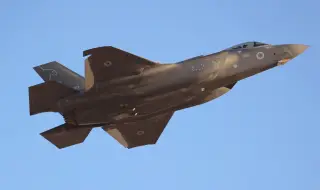
With its new strikes on Iran yesterday, which were an open confrontation with Donald Trump, Israel tried to defend its right to a voice at the negotiating table, from which it has so far been kept away by the US president.
Despite Trump's open call for Israel not to strike, Israel struck targets in the Islamic Republic for the first time since a ceasefire agreement came into effect in April, and Iran fired missiles at Israel, describing its move as a retaliation for Israeli attacks on the Lebanese capital Beirut.
Israel and Iran stopped firing at each other yesterday, shortly after Trump called on them to end the hostilities. However, both sides reserved the right to resume fighting.
By launching the strikes, however, Israel sent a message to Washington, saying that a final agreement with Iran cannot be reached if Israel's interests are ignored, said Danny Orbach, a military historian at the Hebrew University of Israel.
"Because if Israel believes that its interests are being harmed too much, it will take action to fundamentally change its position," Orbach added.
Trump excludes Israel from negotiations
Trump, who started the war with Israel in February, is trying to reach a negotiated agreement with Iran while keeping Israel out of it.
He has publicly called on Israeli Prime Minister Benjamin Netanyahu to refrain from actions that could derail the peace process. For example, he urged him not to launch attacks on Lebanon, where Israel invaded in March to pursue the Tehran-backed Hezbollah group.
Iran has said it will not sign any peace deal with Washington unless the ceasefire also extends to Lebanon.
Last week, Netanyahu called off airstrikes on Beirut after a phone call with Trump. The US president later confirmed that he had called the Israeli prime minister "completely crazy" in the tense conversation, but stressed that they still maintain good relations.
Netanyahu's critics in Israel have accused him of betraying the country's sovereignty by limiting its military actions in order to support the United States in negotiations, even though it has no seat at the negotiating table.
Israel seeks to maintain offensive capabilities in Lebanon
Following Israel's attack on Lebanon on Sunday and Iran's decision to launch a retaliatory attack, Trump made it clear that this exchange of blows was over.
"Both sides had enough fun," he noted to the "Axios".
"Israel struck, so did Iran. We don't need any more attacks," the US president added.
But Israel has concluded that only by retaliating against Iran can it limit the Islamic Republic's future influence on Israeli operations in Lebanon.
Israel could not accept a possible scenario in which Iranian attacks on Israel are considered a justified "retaliation" of Israeli operations in Lebanon, a senior Israeli defense official told Reuters.
Before the strikes on Iran, Netanyahu convened a meeting attended by senior Defense Ministry and security officials to discuss the objectives of a possible short-term escalation, the official said, as well as other officials familiar with the discussions.
One of the goals is to ensure that any future U.S.-Iran deal does not take away Israel's right to attack Hezbollah in southern Lebanon and to continue to deploy troops in the area, the official said.
Netanyahu said he had already raised these considerations during a phone call with Trump this weekend. The Israeli prime minister has not made any public statements or appeared in public since Israel resumed its attacks on Iran on Monday morning. His office has also not commented on the latest developments.
Israel cannot wage a prolonged air campaign against Iran alone, analysts say
The brief resumption of clashes between Israel and Iran, as well as Netanyahu's defiance of Trump's request, are further evidence of the tensions that occasionally arise between the two conservative leaders.
In private conversations, Netanyahu has already admitted that he will have difficulty influencing Trump's opinion on Iran. The Israeli prime minister has told his advisers that he "does not have any leverage" to influence the decisions made by the American president.
Although Israel is capable of attacking Iran without US help, it would still need their approval and support for such a military campaign if it were to last more than a few weeks, military experts say.
"There is no doubt that Israel (cannot) fight a prolonged war on its own, because at some point the ammunition runs out," said Yehoshua Kalisky, a senior fellow at the Israel Institute for National Security Studies.