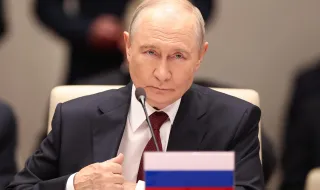
A meeting between the leaders of China and Russia ended with no sign of progress on a new gas pipeline, a top priority for Moscow, De Re Militari reported, citing Nikkei.
The “Power of Siberia-2“ project was on the agenda of talks between Russian President Vladimir Putin and Chinese President Xi Jinping in Kyrgyzstan – their second summit this year.
If completed, the pipeline would carry Russian natural gas to China via Mongolia. With an annual capacity of 50 billion cubic meters, it will become a major energy artery between the two countries, alongside the original Power of Siberia gas pipeline, which began operating in 2019 and delivered 38.8 billion cubic meters of gas to China by 2025.
However, the two countries have different priorities. Russia is determined to accelerate the redirection of its gas exports to the east, while China seeks to secure supplies from Russia on more favorable terms.
Moscow claims that Putin has concluded a legally binding agreement for Power of Siberia 2 During his visit to China in September 2025, Beijing announced no such agreement, and negotiations held in May 2026 have shown no significant progress.
The main reason for the delay appears to be a disagreement over pricing.
During negotiations earlier this year, Chinese officials told the visiting head of Gazprom, the Russian state-owned gas giant, that Beijing would only agree to the pipeline if Russia sold the gas at the same, below-market price that Moscow sells it domestically, the Wall Street Journal reported. in July, citing people familiar with the negotiations.
Analysts say the proposed price would be lower than that for gas delivered via the existing Power of Siberia route and could fall below the break-even point for Russia.
China also imports natural gas from Australia, Qatar and Turkmenistan. The country is working to diversify its supply sources as part of its energy security strategy and has no immediate need to increase its purchases from Russia.
Beijing is also considering its relations with Europe, which remains at odds with Moscow over the war in Ukraine. Since facing tariffs imposed by the Trump administration, Beijing has sought to expand trade with Europe and fears that increased energy cooperation with Russia could damage those ties.
Russia, for its part, is under increasing pressure as the window for gas exports to Europe closes. The European Union has announced a permanent ban on Russian gas imports until November 2027.
Russia's trade with the West has plummeted since its invasion of Ukraine, leading it to become more dependent on China. Bilateral trade between China and Russia rose 25% in the January-June period compared with the same period last year. China has increased its imports of Russian crude oil amid tensions in the Middle East, while exports of manufactured goods such as cars to Russia have risen.
Russia currently relies on China for about 30% of its exports and about 40% of its imports. This contrasts sharply with Russia’s share of China’s trade, which is between 3% and 5%. Although Moscow continues to portray the relationship as one of equals, some observers say Russia is increasingly becoming China’s junior partner.
Since Putin and Xi’s previous meeting in May, Ukraine has stepped up drone attacks on Russian territory. Moscow is struggling to defend itself from long-range strikes targeting oil refineries, logistics infrastructure and other strategic sites, exposing vulnerabilities on its own soil.
Fuel shortages have spread to friendly neighbors, including Kyrgyzstan, while grain and crude oil exports from Russia’s Black Sea coast have plummeted. Kazakhstan’s President Kassym-Jomart Tokayev urged Putin during talks in July to freeze the conflict in Ukraine and return to the negotiating table.