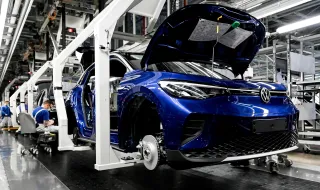
Around the world, “Volkswagen” (VW) will cut around 50,000 more jobs - including management positions. This restructuring of the global workforce is necessary to achieve the goals of the transformation program, the company announced.
What does the future of “Volkswagen” look like
For the four affected plants in Germany, "alternative uses" will be studied in parallel and as a supplement. While this does not mean that a decision to close has been made, it cannot be ruled out. Blume has repeatedly stated that closure is a last resort that he wants to avoid. Discussions are also underway regarding the potential temporary use of arms factories, as well as the production of Chinese Volkswagen models in Germany.
The Volkswagen Group plans to reduce its annual production to nine million vehicles - about one million less than current production and three million less than before the coronavirus pandemic. The goal is to achieve an operating margin of 9% by 2030, ARD said. The profit margin was 3.8% at mid-year. In addition, investments of 135 billion euros are planned for the period from 2027 to 2031 in real estate, machinery and equipment, as well as in research and development.
Will VW manage to overcome the crisis in this way?
According to automotive expert Stefan Bratzel from the Center for Automotive Management, the measures are insufficient to overcome the crisis. “Cost cutting alone will not save “Volkswagen”, writes ARD. Although VW needs to “drastically and quickly reduce its costs”, Bratzel believes that the possible closure of four plants is excessive. In his opinion, the closure of just two plants would be sufficient.
In addition, Bratzel called for more investment in new areas with growth potential, such as autonomous driving and robotics. To realize this potential, the company must show more courage and take greater risks, writes ARD. Without a “radical change in attitudes” “Volkswagen” will hardly be able to regain its competitiveness, the expert believes.
The political impact of the crisis in the automotive sector
The deepening crisis at Germany's largest company comes at a terrible time for Chancellor Friedrich Merz, who has promised to reform the economy and revive the country's industrial base when he comes to power in 2025, writes “Politico”. “The crisis at “Volkswagen” "It affects the mood across the country," Klaus Döre, a German sociologist who specializes in right-wing populism and industrial transitions, told the European media.
These sentiments are helping the "Alternative for Germany" party, which is on the verge of winning an absolute majority in the eastern state of Saxony-Anhalt in Sunday's elections. Although there is no "Volkswagen" plant in Saxony-Anhalt, the far-right party is trying to capitalize on the growing panic in the country about the fate of the automaker and the decline of German industrial power.
"Alternative for Germany" is "skillfully exploiting" the threat of job cuts and plant closures and blames EU policies for tackling climate change, instead of paying more serious attention to VW's real big problem - competition from China, Klaus Döhre tells Politico. "This resonates widely with parts of the working class, not least because they themselves cannot afford an electric car," the expert notes.