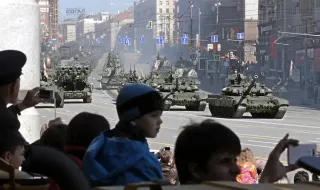
Europe is accelerating its preparations for a possible future war with Russia, while Moscow is already waging a conflict against European countries that is already on the brink of open hostilities. Sabotage, cyberattacks, disinformation, airspace violations and drone operations are becoming a constant test of the readiness of the European Union and NATO.
The European Council condemned in October Russia's "escalating and increasingly reckless behavior" and called for greater resilience, protection of critical infrastructure and an acceleration of action against drones. NATO discussed the same risks at a meeting in Bucharest, where allies focused on energy, digital networks and coordination with the private sector.
“Europe is facing a rapid spread of sabotage attacks and airspace violations,“ said EU foreign policy chief Kaia Kallas. She said Moscow was trying to intimidate European countries into reducing their support for Ukraine. But European ministers drew a distinction between the campaign and the immediate risk of a direct attack on NATO.
Between hybrid pressure and future clash
NATO Secretary-General Mark Rutte said Russia was “testing” allies through airspace violations, arson, sabotage and other hostile acts. He stressed that there was no immediate military attack on the Alliance, but warned that the campaign would continue and that countries must remain vigilant. According to Rutte, the Kremlin's goal is to divide allies and weaken Western support for Ukraine.
This poses a difficult problem for European governments. Hybrid actions are often serious enough to cause economic damage and public tension, but remain below the threshold that would automatically lead to a collective military response. The European Parliament points out that it is precisely the difficulties in identifying the perpetrator, coordinating between countries and choosing a proportionate response that limit the possibilities of deterrence.
Several European intelligence services estimate that Russia could try to test NATO with a limited attack by the end of the decade. This does not mean that Moscow has decided on direct war with the Alliance. Rather, the analyses warn that the Kremlin is using the current period to test the reactions, weaknesses and political cohesion of European countries.
Europe increases defense spending
The preparations are already visible in the budgets. According to the International Institute for Strategic Studies, European NATO members are expected to spend about $639 billion on defense in 2026. The amount is nominally over 90% higher than in 2022, and an average of 36.2% of the budgets are directed to investments, including new weapons, scientific research and production.
The five largest European NATO countries - France, Germany, Italy, Poland and the United Kingdom - said that Europe must take greater responsibility for its own security. This includes increased ammunition production, air defense, protection of critical infrastructure, and the ability to conduct sustained operations without complete reliance on the United States.
The fundamental contradiction remains between preparing for a future conventional conflict and the fact that the pressure has already begun in a less visible form. Russia denies organizing sabotage operations in NATO countries, and European governments have not reported any immediate preparations by Moscow for a full-scale attack. At the same time, NATO and the EU accept that the series of attacks, incidents, and interventions can no longer be viewed as isolated incidents.
Sources: economist.com, investing.com, theguardian.com