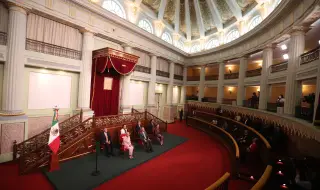
Mexico's Senate has approved sweeping judicial reform that will overhaul the judiciary system of the country. It is planned that the judges will be elected by popular vote, reported "Reuters", quoted by News.bg.
This is a major transformation for the judiciary, and critics fear it could threaten the rule of law and hurt the economy.
The Senate will now move on to discuss objections raised by lawmakers before giving final approval to the reform. It was proposed by outgoing President Andrés Manuel López Obrador and passed the lower house last week.
Senators voted 86 to 41 in favor of general approval of the reform.
On Tuesday, Miguel Ángel Yunes of the opposition PAN party dramatically broke party lines, saying he would support an overhaul of the judiciary. With this, in practice, he gave the ruling party "Morena" and its allies the two-thirds majority required to adopt the constitutional reform.
The US and Canada, Mexico's main trading partners, have warned that this could undermine the USMCA trade pact and negatively impact investment.
The reform also caused public dissatisfaction. Demonstrators stormed the Senate building on Tuesday, waving Mexican flags and shouting "traitors," forcing the session to be suspended.
The opposition has accused the ruling bloc of using underhanded tactics to secure the necessary votes. She claims a senator was detained in an attempt to stop him from voting, while others were pressured or offered bribes. The governing party "Morena" denied these allegations.
López Obrador hailed the reform as vital to maintaining the integrity of Mexico's justice system and ensuring it serves the people, not criminal interests. Critics, however, believe that this is a worrying concentration of power in the hands of the ruling party "Morena".
The backbone of the constitutional reform approved by the lower house last week calls for the election by universal suffrage of more than 6,500 judges and magistrates, including on the Supreme Court.
The reform also reduces the number of Supreme Court judges from 11 to 9, shortens their terms to 12 years, removes the minimum age requirement of 35, and halves the required length of service to 5 years.
New President Claudia Sheinbaum, who takes office on October 2, will be tasked with managing the fallout from the reform, which is likely to dominate the first months of her term.