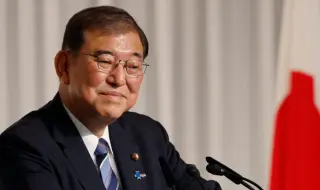
Japan's ruling coalition, led by Prime Minister Shigeru Ishiba, is certain to lose its majority in the House of Councilors after yesterday's election, Kyodo reported.
The Liberal Democratic Party (LDP) and its coalition partner "Komeito" failed to secure the 50 seats they need to add to their current 75 seats and thus maintain their control of the 248-seat upper house of parliament, public broadcaster NHK reported.
The Japanese voted on Sunday for half of the 248 seats in the upper house of parliament. Ishiba said he would not step down after his party's poor showing.
The ruling coalition now lacks a majority in both houses of parliament - the upper house and the more powerful House of Representatives - a rare occurrence in post-war Japan. Opposition support will become even more important for passing laws and budgets, Kyodo News reported.
According to Japan's news agency, the LDP has lost support from some conservative voters, and the right-wing populist Sanseito Party has positioned itself as an alternative. Despite its mantra of "Japan first," and a nationalist political agenda aimed at foreigners - seen by critics as xenophobic - the party will now have at least 13 representatives in the upper house, allowing it to introduce bills.
"Senseito", founded in 2020 by recruiting members on "YouTube", has attracted attention with its slogan "Japan first" and polemical rhetoric, especially towards foreigners.
""I felt the tailwind blowing stronger in the 17 days" of the election campaign, said Sohei Kamiya, the 47-year-old party leader, as he watched the results in Tokyo. He denied any intention to discriminate against foreigners.
In a television broadcast, Kamiya, who was first elected to parliament in 2022, said the strong support for his party was a signal of voters' expectations for tax cuts, increased government support for the economy and a reduction in the influx of foreign workers despite a severe labor shortage. "We will raise these issues" in the upper house, he said.
Kamiya said globalization was "the cause of Japan's poverty," citing the buying up of land and company shares by foreigners. He also criticized what he called the unhindered influx of foreign workers.
The Democratic People's Party has won at least 16 seats, up from 4 so far.
"Senseito" has gained strong support among young voters. According to the Kyodo exit poll, it won over 20 percent of the vote among 18- and 19-year-olds. Many people aged 20 to 40 also voted for the party. Japan's electoral system is proportional.
The party also performed well among people with no clear political affiliation to any party. Eleven percent of them voted for "Sanseito". By this indicator, the party ranks 4th after the Democratic People's Party, the main opposition Constitutional Democratic Party and the Liberal Democratic Party.
Democratic People's Party leader Yuichiro Tamaki expressed relief that his party will have at least 21 seats in the upper house, including seats that were not contested in yesterday's election. This would cross the threshold required to introduce budget bills.
"I see that there is an expectation of new strength" in parliament, he said, and repeated his criticism of the government's "insufficient" response to rising prices.
The more powerful 465-member House of Representatives, the "Senseito", has three seats after the October general election, while the Democratic People's Party quadrupled its seats to 28 at the time.
Although they also called for lower taxes, the more established opposition parties have apparently failed to capitalize on public discontent over prices. Constitutional Democratic Party leader Yoshihiko Noda said the election result was a "public 'no'" for the Ishiba government", but admitted that his party needs to analyze why it failed to achieve a higher result.
The election was a barometer of voters' confidence in the minority government formed a few months ago and growing dissatisfaction with the way it is working to tackle inflation, insufficient income growth and limited progress in negotiations on tariffs imposed by US President Donald Trump, Kyodo added.