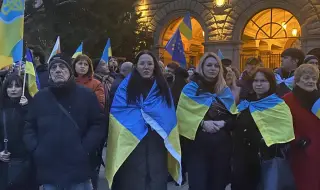
Refugees from Ukraine should no longer receive social benefits such as Bürgergeld - this is what Bavarian Prime Minister Markus Söder is proposing. Instead, they should be supported according to the Asylum Seekers Benefits Act.
This means that from now on they will receive between 353 and 441 euros per month, not 563 euros, as it was before. For a child, the benefit will be between 299 and 391 euros depending on age.
Ukrainians received easier access than other refugees
Similar rights and restrictions apply to all other refugees in Germany. The difference is that after the Russian attack on Ukraine in 2022, the German government, unanimously with the European Union, decided that Ukrainians would not have to go through the standard asylum procedure. This gave them the right to start working immediately and, accordingly, to receive social benefits in the Federal Republic.
Currently, only a third of Ukrainians in Germany are working, which is much lower than the average in EU countries. The absolute leader is Poland, where nearly 70% have found a job. No recent statistics have been published in Bulgaria, but at the end of 2024, Ukrainian Ambassador Olesya Ilashchuk commented that out of 52,000 Ukrainians who received temporary protection in Bulgaria, 14,000 had already found work.
If Ukrainian refugees in Germany received less state aid, the incentive to work would be greater, says the argument of the ruling coalition in Germany, which has long announced that it plans to support them only under the Asylum Seekers Assistance Act.
Since when will Germany limit aid?
A quick solution in Germany is not in sight. While the money under the so-called Bürgergeld is granted by the state and requires participation in various measures for integration into the labor market - such as attending training and applying for a job, for example, there is no such obligation for asylum seekers, and the benefits for them are granted at the local level.
Therefore, the measures envisaged in the coalition agreement, now proposed by Söder, will be difficult to implement, German media comment.
What about other European countries?
Germany is one of the countries in Europe that provides the greatest financial support to Ukrainians. In Poland, even one-time financial assistance was abolished. However, Ukrainians receive a personal identification number from the state, which gives them the right to study, work and have access to free medical care. Ukrainian families are entitled to nearly 190 euros per month for the first child, and the amount decreases from the second child onwards.
Hungary, which is known for its government's anti-migrant and anti-Ukrainian policies, has even tightened the rules for which Ukrainians are considered to be in need of protection. Those who do receive status are granted about 55 euros per month and an additional 34 euros per child.
Ukrainian refugees in Belgium receive the most funds - about 1,100 euros per month, as well as free healthcare and additional funding for the purchase of clothes, glasses and more.
In the United Kingdom, which after Brexit is no longer obliged to comply with EU rules, a weekly allowance of nearly 30 euros is paid for the first child in the family. For each subsequent child, nearly 20 euros per week are paid. Pensioners receive up to 230 euros per week. Other funds are under individual programs, and under the plan for the accommodation of Ukrainian refugees, their hosts receive about 400 euros per month.
How much assistance does Bulgaria provide to Ukrainian refugees?
In Bulgaria, Ukrainian refugees who have received temporary protection can use the same social assistance as Bulgarian citizens. They are also entitled to a one-time assistance of 1,578 leva to meet incidental health, educational, communal and other vital needs. According to data from "Mediapool" in 2024, this assistance was granted in 142 cases.
The Program for Humanitarian Assistance to Displaced Persons, which provides accommodation, also continues to operate in the country. About 9% of Ukrainians in Bulgaria benefit from it - mainly elderly people and people with disabilities. In June, the Council of Ministers allocated another 2 million leva under it.