


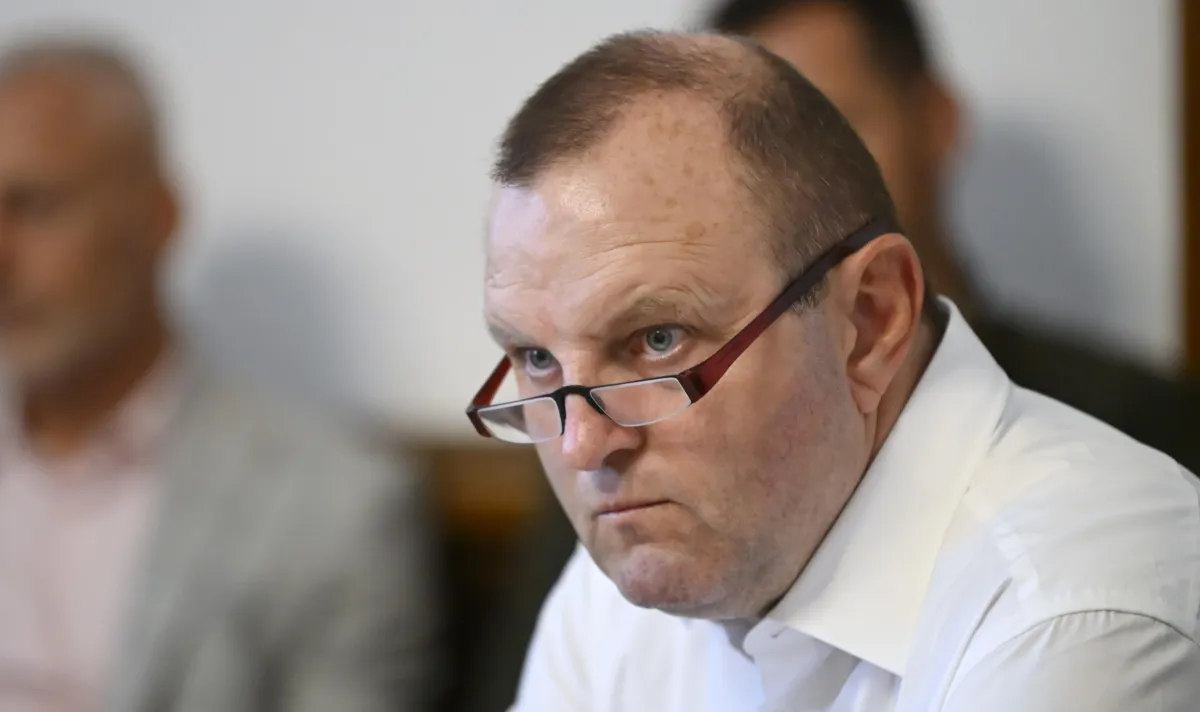

The budget proposals have prevented a more negative assessment of Bulgaria, MP Todor Dzhikov of “Progressive Bulgaria” said. His comment came after Standard & Poor’s decided to change the outlook on the country’s long-term credit rating from positive to stable.
The agency affirmed Bulgaria’s long-term rating at “BBB+” and its short-term rating at “A-2”. This means that the rating itself was not downgraded, but its outlook was changed.
“The outlook has not been lowered; it has been changed. There is no way it could be different, because we all know what emerged from the three audit reports, which clearly showed in practice that the figures had been manipulated for previous years,” Dzhikov told Nova TV.According to the MP, Standard & Poor’s assessment is linked to the growing deficits over the past three years, the increase in external debt and the interest payments on it. He presented charts on the budget deficit, public spending, government debt and central administration expenditure.
Dzhikov said that the draft budget envisages a gradual improvement in the indicators over the next three years. In his words, the deficit, public spending and government debt must be reduced, and this will be achieved through optimisation and reforms in the public administration.
“How will we restore public finances, how will we put a reasonable budget back on track so that we can restore confidence in us, conclude the excessive deficit procedure and consolidate the budget?” the MP said.
He also commented on criticism that spending cuts and reforms were insufficient. In his view, changes in the administration should be carried out in stages so as not to block the work of the institutions and not to place an additional burden on public finances through compensation payments.
The draft provides for a one-off 33% tax on excess profits in certain sectors in 2027. The tax base will be calculated against the average annual taxable profit for the period 2020–2025, while the expected budgetary impact is EUR 800 million.
Dzhikov defended the measure on the grounds that Bulgaria has a 10% corporate tax and that companies generating excess profits should assume greater solidarity-based responsibility in the current economic and geopolitical situation. He identified banks, retail chains and pawnshops as the main sectors affected.
According to him, the budget also provides EUR 2 billion to support businesses and citizens. The MP said that the funds should offset the difference in international gas prices and prevent increases in heating and electricity prices.
The discussion also covered the withdrawal of amendments to the Personal Assistance Act concerning people with disabilities and their assistants. Dzhikov described the decision as correct following the public reaction and said that the system needed a detailed analysis.
He pointed out that the resources required for personal assistance had already exceeded EUR 1 billion, while personal assistants in Bulgaria numbered nearly 85,000. In his view, without an assessment of the costs, the system could create serious pressure on the budget.
Source: nova.bg