


Today marks 134 years since the birth of one of the greatest names in world literature – John Ronald Reuel Tolkien. Born on January 3, 1892 in Bloemfontein (now South Africa), Tolkien will be remembered as the “father” of the fantasy genre, who created an inimitable world filled with myths, legends, languages and cultures, whose influence continues to be felt today - "The Lord of the Rings".
Early years and inspiration
Tolkien spent his childhood in England, where he early showed an interest in languages and philology. Even as a schoolboy, he studied Latin and Greek, and later - a number of other languages, including Finnish, Icelandic and even Gothic. This linguistic talent later allowed him to build entire fictional languages and give authenticity to the peoples and cultures of Middle-earth.
The reality of war also left its mark on Tolkien's work. He participated in the First World War, experienced the horrors of the battlefield in France and lost many friends. The grim images of devastation depicted in his works are thought to reflect some of the trauma of war - although his primary goal was always to create a personal mythology, rather than a specific political or historical allegory.
The Birth of Middle-earth
From his earliest notes and sketches, it is clear that Tolkien was working on a legendarium - a system of myths and stories dedicated to his fictional universe - decades before the official appearance of “The Hobbit“ (1937). The phenomenal popularity of this children's tale encouraged publishers to request a sequel. Thus, after over a decade of creative work, in 1954-1955 his monumental work “The Lord of the Rings“ was published.

Since puberty, Tolkien has felt a fascination with philology, folklore and medieval literature. These interests intertwine to give birth to dense and credible worlds inhabited by humans, elves, dwarves, orcs and hobbits. At the heart of this world is the Ring – a magical symbol of power that tests the will of anyone who comes into its possession. The story is based on the eternal struggle between good and evil, which finds its vivid image in the contrast between the simple but noble Frodo and the greedy, power-hungry Sauron.
„Silmarillion“ and the deeper myth
Along with „The Hobbit“ and „The Lord of the Rings“, a large part of Tolkien's efforts are devoted to „Silmarillion“ – a book completed and published posthumously by his son Christopher Tolkien. It takes readers deeper into the mythology of Middle-earth, describing its creation, gods and demigods, and the great wars between the forces of light and darkness in ancient times. The Silmarillion is often considered the "source" or "root" of everything Tolkien created later, and remains a favorite for those who want to peek behind the curtain of familiar stories.
Influence and legacy
Although Tolkien worked primarily as a professor of Anglo-Saxon literature at Oxford, his literary contributions reached far beyond his classrooms. He shaped not just a plot pattern, but an entire genre. Fantasy as we know it today - from role-playing games to the most popular film and television franchises - is unimaginable without Tolkien. His example inspired writers such as C. S. Lewis, W. H. Auden and hundreds of other creators.
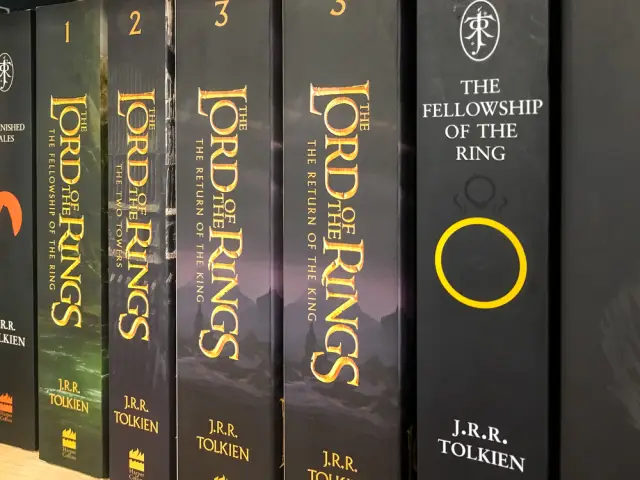
“The Lord of the Rings“ has been adapted many times, most notably in Peter Jackson's films, which have become a true cinematic phenomenon. The trilogy is considered one of the greatest and most influential film series ever made, as well as one of the most profitable series ever filmed. It won 17 Academy Awards from 30 nominations, including Best Picture for “The Return of the King“.
The films further broadened the audience for his masterpiece, igniting the interest of even people who had never opened a fantasy novel before. Today, Tolkien is often seen as a symbol of imagination and a bright refuge from the sometimes bleak reality - his Middle-earth offers solace, where friendship, courage and hope still matter.
Remembering Tolkien Today
134 years after J. R. R. Tolkien's birth, people continue to be inspired by his dedication to words, detail, and the beauty of fictional worlds. Fan clubs around the world organize events, readings, exhibitions, and other initiatives dedicated to his life and work. Some of the most interesting events include Elvish language workshops, musical concerts based on his works, and thematic gatherings where fans share ideas and interpretations of characters and plots.
Tolkien shows that literature can be more than just a leisure activity, but a true journey into the vast - a world of moral dilemmas, pure friendships, and inspiring battles for good. Although he did not live to see our era and died long before "The Lord of the Rings" and "The Hobbit" to shine on the big screen and conquer the hearts of millions, he leaves behind an inexhaustible source of fairy-tale wisdom. And no matter how many times we return to Middle-earth, it still welcomes us as if for the first time we were stepping onto the quiet fields of the Shire, ready for a new adventure.
John Tolkien didn't just write books - he built an entire universe, full of life, love and heroism, from which we can all draw inspiration. Time has shown that even 133 years later, his voice continues to echo among the clouds above Middle-earth. And the best thing is that this voice still has so much to tell us.