


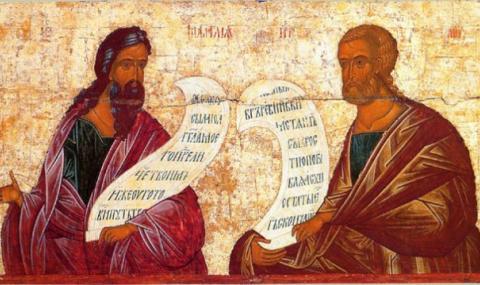

The Holy Prophet Malachi wrote the last prophetic book of the Old Testament and is one of the so-called "12 minor prophets", and therefore Jewish tradition calls him "the seal of the prophets".
He lived in 400 BC. He predicted the coming of St. John the Forerunner, who would prepare the way of the Lord, and the double coming of Christ, whom he called the Sun of Righteousness.
He prophesied in Judea after the return of the Jews from the Babylonian captivity and in the last years of the reign of Nehemiah, between the years 416 and 400 BC. During this time, great unrest arose among the Jews and their priests, which the small book of Malachi (only 4 chapters) denounces. The subject of the severe attacks is the decline of morals among the entire Israeli people at that time, when the new order of Nehemiah and the services in the Jerusalem temple had not yet been established.
In addition to the denunciations, the book of Malachi contains a prophecy about the sending of the Lord's Forerunner with the task of preparing the way for the Coming One and for the coming of the Messiah – Christ, whom the prophet calls "Sun of Righteousness".
The book of the prophet Malachi truly represents the completion of the Old Testament prophecies ("seal of the prophets") and the beginning of the grace history of their fulfillment.
The Eastern Roman emperor Licinius, who had participated in the edict of Emperor Galerius on religious tolerance, married the sister of Emperor Constantine the Great and signed the Edict of Milan, but internally remained a pagan. After the bloody clash with Constantine the Great, which cost him the Illyrian provinces, Licinius continued his hostile attitude towards Christians, of which the young warrior Gordius also became a victim.
Together with many Christians, Gordius left his hometown of Caesarea Cappadocia and hid in the desert until this unexpected and cruel persecution ended. Rumors of the Christians' misfortunes reached the desert. The valiant warrior, who had bravely risked his young life in battle, thought it was not right to hide cowardly when his brothers were suffering and dying for the name of Christ, so he decided to share their fate.
Gordias returned to his hometown, where they were noisily celebrating the pagan god of war, Mars, with horse races and noisy entertainment. Suddenly, amidst the din of the fun, an enthusiastic glorification of the true God rang out. Everyone shuddered and turned their eyes to see who dared to utter such a challenge in the face of the cruel Christian persecutors. But even Gordias' relatives barely recognized him. His clothing was pitiful, and his face bore the scars of the hardships and deprivations he had endured in the desert. The hearts of those around him sank. Many persuaded him to keep quiet and hide, but the executive guards of the Caesarean governor had already managed to capture Gordius and bring him to him.
The governor, who was present at the races and handed out prizes to the winners, asked the brave Christian:
- Who are you and where are you from?
- I am a Christian! Christ is my hope and protection, and I despise your gods, – replied Gordius.
The amazing fortitude with which Gordius endured the cruel tortures to which he was subjected, forced the Caesarean governor to change his course of action, and he tried to persuade the Caesarean youth to renounce his faith in exchange for a high rank and generous gifts. The answer of the holy martyr was unexpected:
- Can you offer me something better than the Kingdom of Heaven?
There was no other choice left for the governor in this confessional determination for war. Gordius was sentenced to death. He was accompanied to his place of execution by relatives and friends. In vain did everyone beg him to spare his youth and his elderly parents by refusing this voluntary death.
- Why do you weep for me? Weep for the enemies of God who persecute us. By kindling a fire for us, they prepare the flames of hell and accumulate wrath for the day of judgment. As for me, I am ready to die many times for Christ.
- You can be saved with one word. Deny Christ in words, but keep the same faith in your heart. The omniscient God will see that you believe in Him with your heart, and He will not condemn you...
- Can I deny my Creator with the language He has given me? In the Holy Scriptures it is said: "With the heart one believes unto justification, and with the mouth confession is made unto salvation". We will condemn ourselves by our words, and by our words we will be justified. Didn't the Lord say: "Whoever denies Me before men, him will I also deny before My Father who is in heaven!"
This was the last answer of the wonderful martyr of Christ. He prayed, crossed himself, and bowed his holy head under the executioner's sword. This happened in the year 314.
The memory of the martyr St. Gordius was greatly venerated in Caesarea Cappadocia. A eulogy has been preserved by his great fellow citizen St. Basil the Great.