


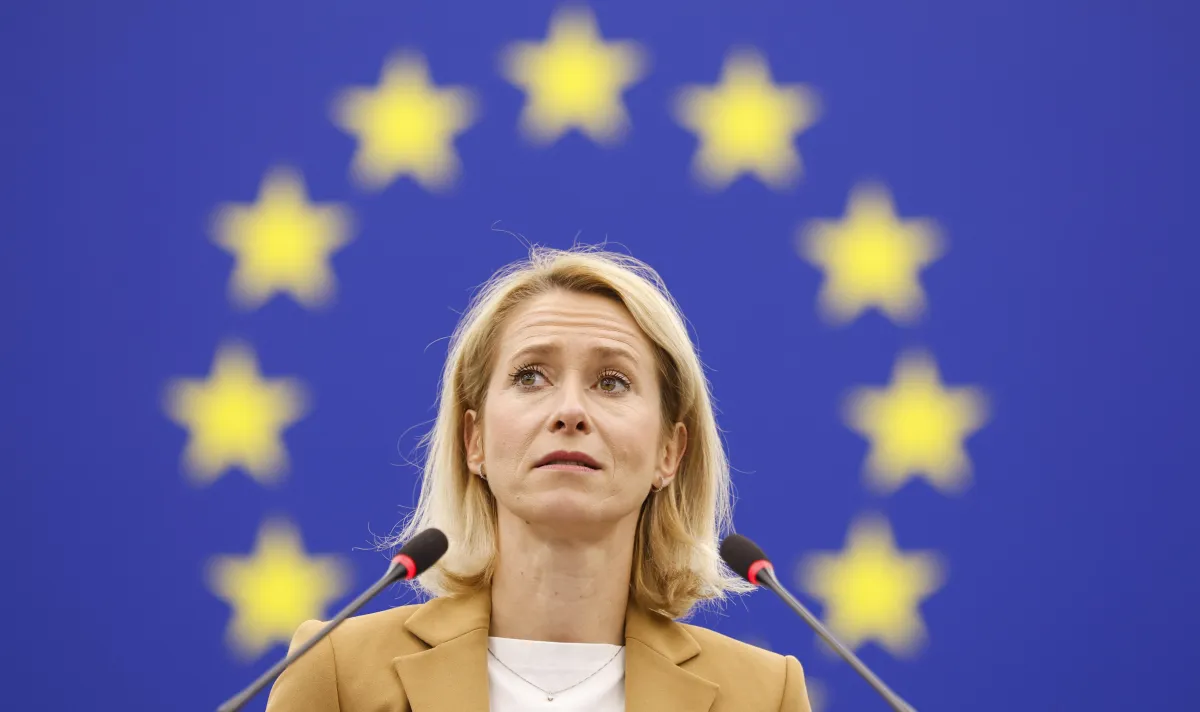

The European Parliament adopted a resolution with 432 votes “for“, 52 “against“ and 88 “abstains” criticizing the Bulgarian government's reaction to the Russian threat in the Black Sea. The document is dedicated to the escalation of Russian strikes in the European Union and the threats to human life, regional stability and food security.
The main initiator and submitter of the texts is the German MEP Sergey Lagodinsky from the Greens/European Free Alliance group.
The submission of the critical amendments was also joined by 7 Bulgarian MEPs:
• From GERB (EPP): Andrey Novakov, Andrey Kovachev, Eva Maidel, Emil Radev, Iliya Lazarov
• From DB (EPP): Radan Kanev
• From the MRF („Renew Europe“): Ilhan Kuchuk
How did the Bulgarian MEPs vote?
Voted „FOR“ the resolution (8 MEPs):
• Andrey Kovachev (GERB / EPP)
• Andrey Novakov (GERB / EPP)
• Eva Maidel (GERB / EPP)
• Emil Radev (GERB / EPP)
• Iliya Lazarov (GERB / EPP)
• Ilhan Kuchuk (MPS / „Renew Europe“)
• Hristo Petrov – Itso Hazarta (PP / „Renew Europe“)
• Taner Kabilov (New Beginning / European Conservatives and Reformists)
Voted „AGAINST“ (2 MEPs):
• Stanislav Stoyanov („Vazrazhdane“ / „Europe of Sovereign Nations“)
• Rada Lajkova („Vazrazhdane“ / „Europe of Sovereign Nations“)
Voted „ABSTINATED“ (3 MEPs):
• Kristian Vigenin (BSP / Socialists and Democrats)
• Tsvetelina Penkova (BSP / Socialists and Democrats)
• Elena Yoncheva (DPS-New Beginning / European Conservatives and Reformists)
Absent from the vote (4 MEPs):
• Radan Kanev (DB / EPP) – co-sponsor, but did not count the vote
• Nikola Minchev (PP / „Renew Europe“)
• Ivaylo Valchev (ITN / European Conservatives and Reformists)
• Petar Volgin („Vazrazhdane“ / „Europe of Sovereign Nations“)
The dispute escalated after a series of attacks on merchant ships in the Black Sea in October. On October 6, two vessels were hit by drones in Bulgaria's exclusive economic zone. The Bulgarian government described the attack as unacceptable, but initially said there was not enough evidence to definitively identify the perpetrator. Later, Prime Minister Rumen Radev said that Russia was the likely responsible factor, but that final proof of Russian guilt was still lacking.
From the attacks to the European reaction
On October 12, Bulgaria requested technical assistance from the EU and NATO to continue the investigation. Prime Minister Rumen Radev held talks with the President of the European Commission and the Secretary General of NATO, and the topic was also included in the agenda of the European Council meeting on 15 and 16 October.
In Brussels, EU leaders described the attacks on civilian and commercial ships in the exclusive economic zones of Bulgaria and Romania as unacceptable and a serious violation of international and maritime law. Radev proposed a moratorium on military strikes against commercial shipping in the Black Sea. On 20 October, the North Atlantic Council expressed solidarity with Bulgaria and Romania and readiness to provide allied support in clarifying the circumstances surrounding the attacks.
Why Sofia was mentioned in the resolution
In the final text, the European Parliament expresses concern at what MEPs call the “vague and ambiguous” response of the Bulgarian authorities to the escalating Russian threat. Sofia's weak diplomatic response to the Russian Federation is also mentioned. The most specific request is that Bulgaria confirm by October 30 its participation in a NATO initiative to counter drones.
It is the delay on this issue that has turned the topic from a dispute over the public assessment of the attacks into a dispute over specific defensive actions. The EP also insists that NATO consider a new initiative for the Black Sea based on the “Black Sea Watch“ project, as well as for closer cooperation between Bulgaria, Romania and Turkey. The document defines the security of the Black Sea as part of the security of the entire European Union and calls for European funding for the protection of coastal and port areas.
What did the Bulgarian government respond to
Rumen Radev rejected the criticism and said that the controversial text was added to the draft at the last minute. “I express my categorical disagreement and bewilderment“, the prime minister said in a letter, pointing out that during the European Council he had held a meeting with NATO Secretary General Mark Rutte and Romanian President Nicos Danus.
The government claims that Bulgaria has activated its surveillance, intelligence, detection and response capabilities in the Black Sea. According to the cabinet, the country has requested international technical assistance, and after talks with NATO, an American P-8A “Poseidon“ aircraft is already patrolling the sea. However, the resolution shows that for a significant part of the MEPs, public assurances have not replaced the expected political decision to join the anti-drone initiative.
The next specific deadline is October 30. Next, Sofia must give an official response about its participation in the NATO initiative, while the investigation into the attacks on the ships continues.
Sources: bnrnews.bg, apnews.com, btvnovinite.bg