


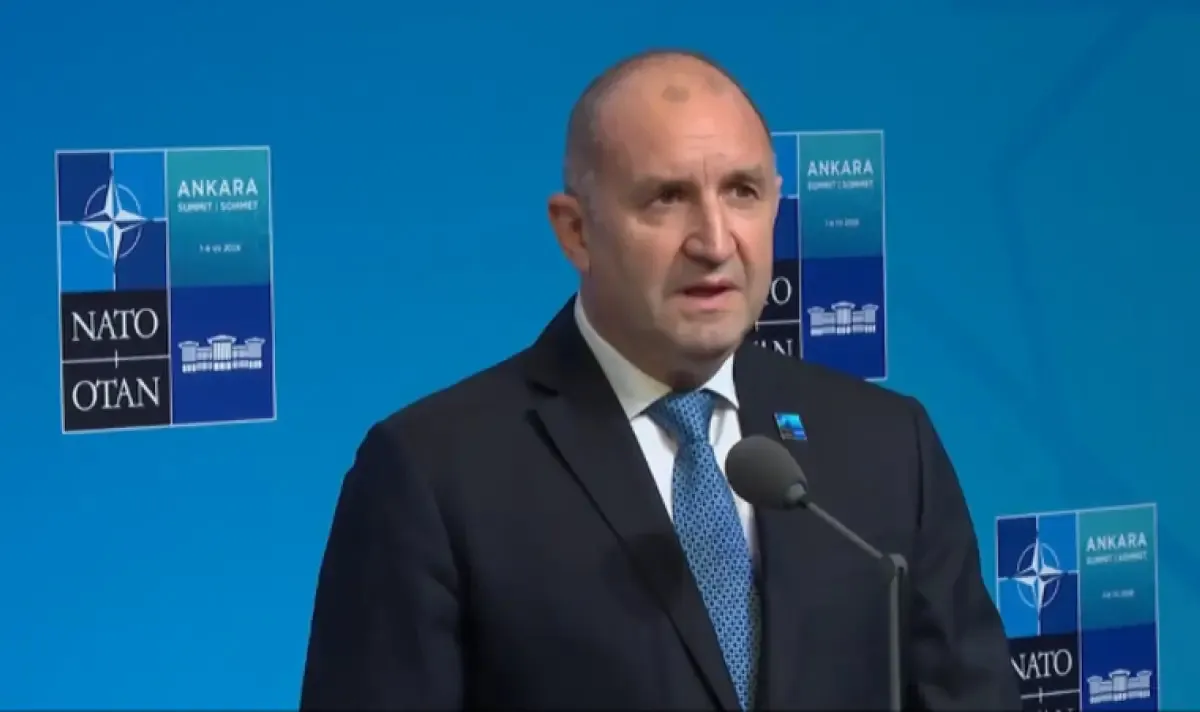

Bulgaria is the only European Union member state that did not sign the declaration on the key principles of European security, adopted in Dublin. The document was supported by 39 European countries as part of the summit of the European Political Community.
A total of 47 countries are taking part in the forum. Germany, Ukraine, the United Kingdom, Italy and Poland are among the signatories to the declaration. No reasons have so far been given for Bulgaria’s decision not to join the document.
What the declaration contains
The declaration was proposed at the initiative of France and sets out common principles for the security of the continent. It is based on existing international acts and treaties, including the UN Charter, NATO treaties and European Union treaties.
French President Emmanuel Macron said that the countries had “reached agreement on common principles for Europe’s future security”. He said the document was important because it affirmed the need for European countries to participate actively in decisions concerning their own security.
The text states that European countries are assuming greater responsibility for Europe’s security. It also says that decisions concerning Ukraine must be taken with Ukraine’s participation, and that all issues affecting European security must be resolved with the participation of European countries.
Focus on hybrid threats
The document expands the scope of the traditional understanding of security. It includes countering hybrid campaigns, cyberattacks, information interference and manipulation, as well as measures to strengthen the resilience of democratic institutions.
The countries that signed the declaration undertake to develop tools to prevent destabilising actions that do not reach the threshold of an armed attack. Countermeasures are also envisaged when necessary.
Other topics in the charter include the fight against terrorism, drug trafficking and human smuggling. The countries also state that Moscow’s hybrid campaigns will strengthen their commitment to Ukraine.
Talks with Russia after the end of the war
According to the German news agency DPA, the vast majority of European countries are ready to negotiate with Russia on key security issues only after the end of the war in Ukraine and the restoration of peace.
The declaration allows for discussions on measures to manage and reduce security risks, but makes this conditional on the fulfilment of the necessary conditions. The document also calls for reliable and stable security guarantees for Ukraine.
Among the countries outside the European Union that also did not sign the declaration are Armenia, Azerbaijan, Bosnia and Herzegovina, and Switzerland.
Sources: vesti.bg, bta.bg