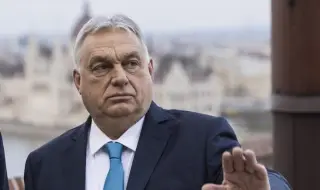
Former Hungarian Prime Minister Viktor Orban denied the new government's claims that they inherited a country in economic and social decline. On the first day of his cabinet, led by Peter Magyar, the former prime minister listed the achievements of his government over the past 16 years.
He recalled that during this time “over 1 million new jobs have been created in Hungary“, preferential gas and electricity prices have been introduced, families with children have received significant tax breaks, specialists under 25 are exempt from paying taxes, pensions for the 13th and 14th grades have been introduced, and young families have been able to get mortgages with 3% per annum. “The minimum wage has increased 4.5 times, and the average salary has quadrupled since 2010. The average salary for doctors is 2 million forints (over 5,500 euros), while for teachers it is approaching 1 million forints (about 2,800 euros)“, Orbán said in a video address broadcast on Hungarian television channels.
“We doubled state assets, bought the airport and energy companies from foreigners. Hungary's gold reserves have increased from 3 tons to over 100 tons, and our foreign exchange reserves have reached their highest level in history. Hungary is the safest country in Europe; there are no migrants in Hungary“, the former prime minister noted.
“Our experience speaks for itself. Hungary is now headed by a liberal government. Let us hope that it will not squander what our patriotic forces have built over the past 16 years,“ added Orbán.
Economic situation
Meanwhile, in a recent interview, the former prime minister admitted that the main reason for his party's defeat in the April 12 parliamentary elections was the country's poor economic situation. Orbán believes this is due to the conflict in Ukraine, EU sanctions against Russia and the general economic downturn in Europe, including in Germany, Hungary's leading trading partner. The government has reported losing EUR 10 billion a year as a result of rising energy prices.
However, experts noted that “there are many questions for the government“ about its decisions, many of which are far from correct. In the first quarter of this year, Hungary's economic growth was 1.7% compared to the same period last year, but the country's economy has stagnated for the past three years, followed by a slow and unstable recovery.
The new Prime Minister Péter Magyar, criticizing his predecessor, claims that “Hungary has become the poorest and most corrupt country in the European Union“. According to Eurostat, the EU's statistics office, Bulgaria will remain the poorest country in the bloc in 2025. It still ranks last in the EU in terms of GDP per capita. Greece, Latvia and Lithuania are also among the poorest EU countries by various indicators.
Orbán's Fidesz-Hungarian Civic Union party went into opposition after its election loss. Péter Magyar, leader of the Tisza party, was elected as the new prime minister on 9 May, winning 141 out of 199 seats in parliament. His government was sworn in on 12 May and began work.