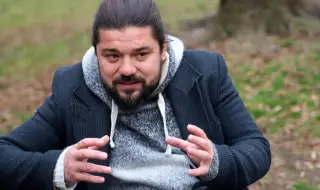
"I was surprised that President Rumen Radev resigned right now, because the requests have been clear for a long time. This probably should have happened at the end of his first term. Then it was a more appropriate time both from the point of view of the naturalness of the process and in terms of Radev's request itself. This was said in an interview for the program "Newsroom" on Radio FOCUS by political scientist Strahil Deliyski.
In his words, the four years of the president's second term have passed in constant preparation for entering party politics. "The president is by definition part of politics. Now he simply enters with his party role, but he is not outside politics or the political elite. This peculiar "leap" It may be symbolic, but as a real engagement with politics, it does not represent much of a leap. The whole conversation is oriented towards "okay, now what will happen", and the emphasis is placed on a quick electoral reaction."
According to him, the question is not simply to gather votes, but what is the meaning of this electoral support and how it will change the political dynamics. "From here, the whole so-called jumping of the president somehow becomes meaningless. Because in politics you jump to do something, and you do this with the help of electoral support. You do not jump to get electoral support per se", Deliyski explained.
The political scientist pointed out that Radev's possible participation in the upcoming early elections will probably rearrange the political configuration in the country. "In conditions of dwindling trust in institutions and parties, there is always a search for a new political entity. Such a demand at the moment. Regardless of the form, part of this demand will probably be satisfied by Radev“. In his words, the question is whether the political product will meet the real expectations of society or will simply satisfy momentary electoral needs.
"The meaning of political activity is not simply to exercise power, but to formulate and achieve large collective goals. The request "destroy the model“ sounds ambitious, but lacks concreteness. From the first democratic elections to today, there is almost no leader who has come to power with the request to destroy the model. It is usually thought of as a fight against corruption, but the result is cyclical – the new rulers over time become the object of the same struggles themselves. And so it has been for more than 20 years. I fear that something similar will happen this time too“, Deliyski noted.
Regarding the procedure for selecting a caretaker cabinet after Radev's resignation and the role of the new president Iliana Yotova, the political scientist said: "We may find ourselves in a dead end because the process is not well-established enough. The system should work smoothly, without personal whims. In this case, it is not the case and this should weigh on the conscience of those who rushed to change the Constitution in this part“. According to him, this is a problem of both the procedures and the institutional culture of the participants. “We are entering the quagmire of a situation that can really lead to a deepening sense of political crisis“.
Deliyski also emphasized the complex political and institutional situation in the country: "Currently, we do not have a legitimate prosecutor general, a regular government and a functioning budget. It is clear that we have not had any hope for a long time. At the same time, we aim for our accession to the Eurozone to proceed smoothly and without problems - an extremely difficult challenge. It is as if some of your rich friends invited you to a restaurant, to go out with them, but you have no car to go with, no clothes to wear, no money to pay the bill. Moreover, you have no lady to brag about, but you still have to go.“
According to the political scientist, the parties should focus on real solutions, and not on symbolic actions such as “decomposing the model“.
The political scientist warned that a quick resolution to the political knot should not be expected: “We are not even in the middle of a political crisis, but only at its beginning. The only thing we can do is demand that political representatives acknowledge the systemic defects and work to overcome them, instead of ignoring them.“
“To start talking about a positive future, we must first start talking about the systemic nature of the crises. And then we can talk about development and prosperity“, added Deliyski.
Regarding the decision for Bulgaria to join the Gaza Peace Council, headed by Donald Trump, Deliyski commented: "Such decisions should not be made by a cabinet in resignation. Moreover, this act implies the expenditure of public resources. We are talking about billions here, which we have to pay. This is not a small amount. Moreover, the nature of the commitment is unclear.“
"The criticism is that Bulgaria is making a commitment to join a political company that is supposed to make some whitewash. This seems to be unprecedented. Bulgaria's inclusion in the US company has almost always been to make some whitewash. This is not some geopolitical revolution that we are making. It's just that at the moment the US and its satellites around them decide to make whitewash, without telling it as a battle for democracy. So we are not doing anything different, we are just doing it in a different context. And the steps are being taken by people who haven't asked anyone if now is the time and place," concluded Strahil Deliyski.