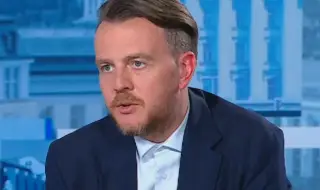
If we do not take measures, the worst is yet to come. The debt is at 30% of GDP. If we do not take measures, our debt will go to levels of 45-50% of GDP by 2030 - something that happened in Romania. In Romania, they showed how in 3-4 years you can go from the levels we are at right now to the moment when you catch up with Germany with 60% debt. He said this in an interview for the show "More from the Day" on BNT, economist Petar Ganev, quoted by novini.bg.
"High inflation brings revenues to the budget. They grow by 15-16% on an annual basis. The big question is why, with increasing revenues, your budget position is getting worse? The answer is that expenses have been missed and the new regular budget must bring them back under control," he added.
The leading factor influencing prices, according to Ganev, is external and is rooted in what is happening in the Strait of Hormuz. "This is a shock that cannot be fully controlled. It can be somewhat alleviated for risk groups. This is a shock that says that consumption needs to be reconsidered a little. If we just pour a bucket of money and put a price ceiling, then the signal "think a little when you consume fuel, because there is not enough" disappears, and we start to fool ourselves and simply consume something that is actually expensive for the budget. It is good to take the signal into account. There is a problem with fuels. If less can be consumed somewhere, this should be done. In my opinion, people who use diesel are already somewhat rethinking their consumption, since there is a greater increase in price," said Petar Ganev, specifying that in principle the idea of a price ceiling is practically impossible to implement.
And he added: "From now on, let's stop this "injection" for a while, since part of the inflation comes from the expansion of the budget and credit. Huge "pipes" that pour money into the Bulgarian economy through credit and this leads to consumption and inflation".
"The figure of the Minister of Finance to the greatest extent embodies the vision for the management of public finances, and to a large extent for the economy. From the point of view of the economy, it is very possible that the Minister of Innovation and European Funds will have a greater role than the Minister of Economy. It is possible that both posts will be merged into one. When looking for a reduction in public spending, one of the ways is to merge administrations. But if we simply merge them artificially and the number of people remains the same, this will not work. Public spending, however, is the big problem. That will be the first big move of the new government. Personnel and administrative costs are one of the big problems," the economist also commented.