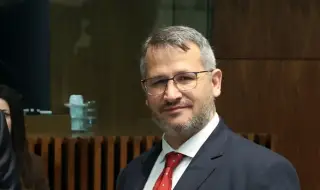
Former Acting Minister of Agriculture Ivan Hristanov commented in the studio of “Your Day“ on the measures discussed by the government against the rise in prices of basic goods, expressing skepticism about their effectiveness. According to him, administrative control over prices cannot give a sustainable result in free market conditions.
Hristanov emphasized that there is an extremely large number of trade and production participants in Bulgaria, which makes effective control practically impossible. “How exactly do you check 150 thousand commercial establishments, 15 thousand producers and 70 thousand farmers?“, he asked and added that such an approach inevitably leads to distortions.
He stated that the main driver of inflation is increased consumption and the growth of public spending. "When you increase salaries in the public sector, you directly produce inflation," said Hristanov, predicting that price pressure will be felt more strongly in late 2025 and early 2026.
According to him, the real regulators of the market should be not only the Competition Protection Commission and the Consumer Protection Commission, but also the National Revenue Agency and, if necessary, even the Ministry of Interior, since the pressure on the system is serious and requires broad institutional control.
Hristanov also commented on the concept of "fair price", stating that it is subjective and difficult to apply in economic practice. According to him, such concepts carry the risk of turning regulators into a tool for pressure on business.
He emphasized that the decline in prices in certain periods is natural and is mainly due to seasonality and the entry of new products into the market. “When competition increases, prices always go down“, the former minister pointed out.
Regarding international factors, Hristanov warned that a possible increase in fuel prices due to geopolitical instability could put additional pressure on the sector. However, he stated that some of the measures to support agricultural producers had already been taken during the caretaker government.
As a long-term solution, Hristanov pointed out the need to build a national system of collective markets and exchanges that would facilitate the sale of production and reduce dependence on intermediaries and large retail chains. In his words, it is precisely the lack of such infrastructure that leads to structural problems in the sector and price imbalances.
“If we do not start thinking long-term, we will go around in circles with every new crisis“, he concluded.
In his words, when there are doubts about coordinated actions in the market, state institutions must react quickly and categorically - either to refute them or to prove them with facts. Hristanov, however, noted that in recent years some of the regulators have been acting “lazily“ and this further fuels public distrust.
Hristanov defended the thesis that the solution lies in a higher degree of cooperation in the sector, which would allow producers to have a stronger voice in the market. However, according to him, political decisions in this direction have been systematically delayed, which has led to fragmentation of the sector.
He also commented on the topic of administrative procedures for public procurement, including discussions around spraying against mosquitoes. Hristanov defended the actions of the previous government, stating that the decisions were taken within the framework of the law and in order to guarantee the implementation of critical activities.