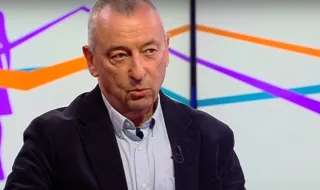
Bulgaria must play an active role in the search for a solution to end the hostilities in the Black Sea region and the establishment of a shared security zone. This was stated in the program “Crossroads” by the former Minister of Foreign Affairs and Chairman of the 40th National Assembly Georgi Pirinski.
In his words, our country should not remain a passive observer of the escalation, as the development of the conflict in the Black Sea region could lead to serious consequences for the security of Bulgaria. Pirinski emphasized that at the present time it is particularly important to assess whether the conflict will continue to escalate, or whether actions will be taken to limit the tension. “At the moment, in my opinion, we are at an inflection point in terms of the development of this entire conflict“, he stressed and pointed out that the main question is whether a new escalation is imminent, or whether a way will be sought to calm the situation and begin more concrete efforts to find a way out.
According to the former Foreign Minister, the moratorium on strikes in the Black Sea should be considered not as an isolated measure, but as part of a broader process to achieve sustainable peace. He recalled the idea of Bulgaria actively participating in the search for a consensus to end hostilities in the region and to build a zone of shared security. “This is shared security. Security in which, in order to feel secure, I want my neighbor, adversary or whoever, also not to feel that I am threatening them. And vice versa“, Pirinsky explained.
Such an approach requires each side to take into account the main concerns of the other. From the Russian perspective, among the leading concerns is that Ukraine does not pose a potential threat to Russia, while for Kiev, the main priority is ensuring national security and preventing future Russian attacks. Pirinsky noted that the war and the devastation suffered by the Ukrainian population make restoring trust extremely difficult.
He also raised the question of whether Russian President Vladimir Putin would accept a moratorium on strikes and what conditions could encourage such a decision. In his opinion, a sustainable agreement requires not only a cessation of hostilities, but also the creation of conditions for a gradual reduction in mutual distrust.
Pirinsky expressed a critical attitude towards the European Union's approach, which, in his opinion, should not be limited to adopting new sanctions packages and providing financial and military assistance to Ukraine. According to him, European countries must formulate a clear strategy for achieving peace. “Bulgaria must insist that the European Union not simply accept another package of sanctions, not simply say how consolidated we are, but come up with its own clear vision for peace“, he said.
The conversation also raised the question of whether support for Ukraine and the desire to prevent its capitulation are compatible with the search for shared security. Pirinski pointed out that, in his opinion, there is an attitude in European policy to inflict a strategic defeat on Russia, which supports the logic of continued confrontation.
According to him, Bulgaria's national interest should not be reduced to unconditional support for one side and condemnation of the other. Instead, the country should seek opportunities to reduce tension and create conditions for negotiations. "The national interest is to find a way for these fiercely opposing countries to begin to reduce the level of heightened confrontation," he said.
Pirinski warned that further escalation of military actions, including strikes on civilian infrastructure and the expansion of the scope of attacks, creates additional risks for security in the region. According to him, Bulgaria should use its opportunities within the European Union to promote initiatives for de-escalation and cessation of hostilities.