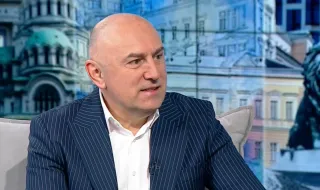
The deficit as of August is around 2.8% and is unlikely to exceed 5 percent by the end of the year. This was commented on in the show "The Day Begins with Georgi Lyubenov" on BNT by Lyubomir Karimanski, who is a member of the Governing Council of the BNB.
"And I'll tell you why. Because there are enough prerequisites that suggest that not all capital expenditures can be used. All those programs that are listed in the Budget for 2026 with regard to state investments. That is. the state will hardly be able to invest that much".
No matter how you build - you have a certain potential, Lyubomir Karimanski pointed out. You cannot exceed it, you cannot surpass yourself, he added.
"This is, if I compare it with a metaphor. If you go to the desert and you haven't drunk water for a long time, which glass of water, if you drink 10, is the sweetest to you? That is, your first is the sweetest. This is the maximum norm of satisfaction from the point of view of a person's potential. That is, he can drink 10 glasses, but he cannot drink more than 10. We have a certain potential".
Lyubomir Karimanski pointed out that "the same is true with the absorption of investments in the economy, there is a certain potential that cannot be exceeded.
"We see what is happening with capital expenditures since the government came. Yes, they have some rate of growth in absorption from the point of view of the economy, but it is not such that it suggests that all capital expenditures will go to individual projects by the end of the year".
"The national medium-term fiscal-structural plan was adopted in 2025 by the previous regular government. After the deficit for 2025 exceeded 3%, Bulgaria entered an excessive deficit procedure. This required the presentation of a plan to the European Commission within the specified deadline of October 15. The question is to what extent this plan gives us a clear idea of the entire budget. It does not contain the same level of detail as the state budget, which lists the funds for the individual primary budget spending units, including the Ministry of Defense".
We know the general parameters for defense, but we do not have enough specifics for all individual expenditures, Karimanski explained. The situation is similar in other sectors.
He expressed concerns that what has not been presented does not provide the necessary idea to Brussels.
"When the EC demands to be presented how public spending will be reduced, especially those in certain sectors such as security and defense, in terms of salaries and wages, in terms of the automatisms introduced in the past, it is not clear how they will be canceled. The plan does not mention that these automatisms will be canceled in the budget".
It is absolutely devoid of financial logic to introduce automatisms for remuneration in the public sector, which directly affect the budget, into specialized laws, and for them not to be where they belong - in the state budget, Karimanski explained. According to him, this is one of the things that needs to be changed.
The second thing that needs to be assessed in the expenditure section, according to him, is to what extent there is an assessment of the efficiency of the public sector.
"How efficient is it in terms of the services it offers to citizens. I hear now that they are going to raise teachers' salaries. And the unions are protesting. The question here is when did we ask the unions and everyone else, since teachers' salaries are increasing every year, what is the effectiveness of teaching".
And he adds with a clarifying question - what effect have we achieved given that PISA and all other tests tell us that we are in one of the last places in terms of functional literacy.
Lyubomir Karimanski explained that nowhere in the plan sent to the EC are there any mention of measures by the government in relation to all the overdue obligations it has to the NRA.
"This is essential. Every year the NRA has so many overdue receivables that it cannot catch up in terms of collection. And here there must be a precise and clearly outlined plan on how they will increase... More than 800 million can go there, I guarantee you".
In his words, "it is speculated that the capital of the Bulgarian Development Bank was reduced at some point. It was never reduced after the regular government increased it by 2 billion euros".