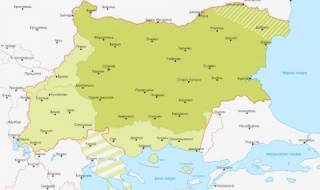
On September 7, 1940, the Treaty of Craiova was signed.
The treaty obliged Romania to return Southern Dobrudja to the Kingdom of Bulgaria.
The document is one of the few that were not revised after the end of World War II. However, we must admit that the treaty was imposed by Nazi Germany, the USSR and Italy.
The terms of the treaty required Romania to return Southern Dobrudja to Bulgaria, as well as to carry out a population exchange from Northern Dobrudja and Southern Dobrudja.
On August 19, 1940, painful and difficult negotiations took place between the two countries. The Romanian side sought to make as few concessions as possible, but in the end it had to return the southern part of Dobrudja to the Kingdom of Bulgaria.
Thus, 88,000 Romanians, settled by the Romanian authorities after the end of the Second Balkan War in 1913, when the territory of Dobrudja was occupied by Romania, were forced to leave and move north, while 68,000 Bulgarians from the northern part moved to their homeland.
The turning point that served as a catalyst for the processes related to revisionism towards the Romanian state was the German offensive on the Western Front that began on May 10, 1940. The catastrophic defeat of the Allies largely destroyed their international prestige.
The unification of Eastern Rumelia with the Principality of Bulgaria in 1885 and the return of Southern Dobrudja to Bulgaria are some of the most significant events in the recent history of our country. Their significance is further enhanced as they represent an undisputed success of Bulgarian diplomacy and a serious step towards the unification of the Bulgarian lands into one state.
Southern Dobrudja was taken from Bulgaria by the Bucharest Peace Treaty of the summer of 1913 and annexed to Romania. In this way, Northern Dobrudja, which was given by Russia with the Treaty of San Stefano (1878) and confirmed by the Great Powers with the Treaty of Berlin (1878), was added to Bucharest's hands. During World War I (1915-1918), the two Dobrudjas were liberated and remained within Bulgaria until the end of the war.
The Treaty of Neuilly (1919) again took them away from the Fatherland and handed them back to Romania. After lengthy diplomatic negotiations and with the support of Germany, the Soviet Union and other European countries, Southern Dobrudja was returned to our country on September 7, 1940. The Paris Peace Treaty after the end of World War II reaffirmed the decision of the Craiova Agreement. In this way, Southern Dobrudja remains an inseparable part of the Motherland.
For the success of Bulgarian diplomacy, we must first of all note the merits of the great Bulgarian diplomat Svetoslav Pomenov, who led the Bulgarian delegation during the negotiations in Craiova. He participated in the Bulgarian delegation at the Paris Peace Conference (1919). In addition, he was the manager of the Bulgarian legations in Sweden (1920), Switzerland (1920), Germany (1921); Minister Plenipotentiary to Germany (1923), Romania (1925), Germany (1931), Italy (1934) and Chairman of the Bulgarian Delegation for the signing of the Treaty of Craiova (1940).
From March 1941 to August 1943, Svetoslav Pomenov was Chief of Staff to Tsar Boris III. As a reward for his dedicated service to the Motherland, this distinguished Bulgarian diplomat was sentenced to death by the People's Court and shot on February 1-2, 1945.