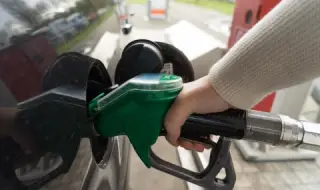
The conflict in the Middle East expectedly affected the fuel market. After the attacks between Israel and Iran, the price of oil saw a jump. How are the values moving now and will there be another increase in the columns before the holidays at gas stations in our country.
Peter Stamenov decided to return from abroad and start his own truck business. Charge it frequently. "I've been with this truck for a few months now and it's been hella tough. He spends 20 per 100, at the same time people don't have money, and I drive at some minimum prices... if the truck breaks down tomorrow, I don't know what I'll do," he told Nova TV.
He says that his biggest fear is that prices will not jump or catch up with those in Greece and Romania. "Last time it was 2.50, 2.60 something like that. Now it's 2.70, 2.75. 20 cents when a person works with this daily," he explained.
Experts reassure.
"I do not expect drastic changes in fuel prices, although the situation on the international markets is dynamic, the tension between Israel and Iran is pushing prices up, and this is something we cannot fully control and predict," Martin Vladimirov pointed out from the Center for the Study of Democracy.
A price plateau is predicted. "If something doesn't really happen around the Red Sea, I mean something more terrible, I think that will be the case in the next few months," said Dimitar Hadjidimitrov from the Association of Bulgarian Fuel Traders.
There is no reason for prices in Bulgaria to reach those of our neighbors, even after the adoption of the euro. "You know that in different countries the prices are different, but it is related to the different rates of excise duties and VAT. In Greece, they are one of the highest", noted Vladimirov.
In the short term, slight fluctuations in column values are possible. Hadjidimitrov suggested that maybe it will be 2-3 cents up or 2-3 cents down.