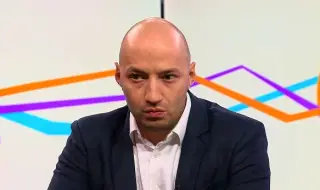
The number one problem for Bulgarians is high prices. This creates serious tension among people and the topic will be relevant in the next few months. The other important topic is entering the eurozone. These two issues are united in the minds of Bulgarians. This was said by political scientist Dimitar Ganev in the studio of “Crossroads”.
He pointed out that the political agenda does not always coincide with the public one. According to him, at the beginning of the new season, one of the topics that can provoke protest actions is the rule of law and corruption.
Ganev believes that “Democratic Bulgaria” and “Continuing Change” are “making an attempt to restart” with the protests in Varna due to the arrest of Mayor Blagomir Kotsev.
„PP-DB were in a difficult political situation after the scandal surrounding the Sofia Municipality. Just a few weeks after that, with the arrest of the Varna mayor, it seemed that a certain line had been crossed. Here the effect was no longer of continued pressure, of image damage, but rather a tightening and mobilization of the ranks. Thus, PP-DB returned to the game”, the political scientist also commented.
He also said that “Vazrazhdane” and PP-DB have announced dates for separate new protests. Ganev pointed out that these are political formations that cannot talk to each other and therefore it is unlikely that they will form a common opposition bloc.
The political scientist emphasized that the third opposition center, which is trying to criticize the government in all areas, is Rumen Radev, but he is not recognized by either "Vazrazhdane" or the PP-DB as a partner with whom he can form a common front. According to him, the president is trying to accumulate political capital with his criticism, which he can use to create his own political entity. He believes that Radev aims to position himself as an alternative to the government.
Vote of no confidence
For the PP-DB, this vote of no confidence is imperative in order to legitimize themselves as an opposition again, Ganev believes. He pointed out that in the past months the coalition has been in a difficult position – on the one hand, it did not support the no-confidence vote, and on the other hand, they categorically state that they are the opposition to the cabinet.
According to him, the no-confidence vote will be unsuccessful.
“The parliamentary opposition does not have the tools to overthrow this government. If there is anything that threatens the government, it is the problem with prices and the parliamentary opposition in the parliamentary majority – a rift among the partners, which is not noticeable at this stage,” the political scientist also said.