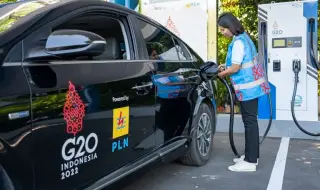
Better batteries, longer range, cheaper electricity: a quarter of new cars are now electric. The energy crisis caused by the Iran war is strengthening the trend towards this type of vehicle.
The global market for electric cars is growing much faster than expected. In just six years, sales have increased tenfold, reaching a share of 25 percent in 2025. Today, of the 1.4 billion passenger cars in the world, about 85 million are powered by electricity.
China is a leader in electromobility
China is the largest automobile market in the world. For years, the communist state has been investing in future technologies, including batteries for electric cars. And they continue to get cheaper: today their price is four times lower than ten years ago.
In China, electric cars cost less than conventional ones - those with diesel or gasoline engines, and this has been the case since 2024. In addition, the state is significantly expanding the charging infrastructure, and electricity is very cheap. If in 2015 the share of electric cars made up only one percent of all new sales, then in May 2026 it reached 63 percent.
In the EU, every third new car is electric
In 2018, the share of electric passenger cars among newly registered in the EU was only one percent, while in April 2026 almost every third new car in the Community countries was electric. The leader is Norway, where almost no cars other than electric ones are sold anymore (99 percent), followed by Denmark (82 percent) and Sweden (65). Their governments have long promoted eco-mobility, and the charging infrastructure is already very well developed and continues to expand.
In the United Kingdom in May this year, about 40 percent of new passenger cars were electric, in Germany - 37 percent, and in France - 34. In all three countries, sales of electric vehicles increased by about 30 percent compared to the same month of the previous year.
According to Forbes, Bulgaria is among the countries in the European Union with the largest jump in sales of new electric vehicles. In April, 456 electric vehicles were registered in the country, which is 216 percent more than in the same period in 2025.
USA: the electric vehicle market is stagnating
In recent years, the electric vehicle market in the US has stagnated. Between 2023 and 2025, the share of electric vehicles among newly registered passenger cars was only ten percent, and in April this year it even fell below six percent. Last year, the US ended tax breaks for the purchase of new electric vehicles.
The Model Y and 3 of the American company "Tesla" are the best-selling electric vehicles in the world. They are followed by mainly Chinese models.
Globally, the most electric vehicles are produced in China (71 percent), in Europe (17) and the US (5). Other electric car manufacturers include South Korea, Japan and India, with a share of between one and two percent.
The boom is gaining momentum in Asia and Latin America
In many countries, including developing and emerging countries, the share of electric cars among new car sales is significantly higher than in the United States.
According to the International Energy Agency (IEA), the leader in electric car sales in Asia is Nepal with a share of 68 percent, followed by Singapore (63), Vietnam (41) and Thailand (23). In Turkey, 22 percent of all cars sold last year were electric.
In Latin America, electric car sales have tripled in the past two years. Uruguay leads the way with 31 percent, followed by Costa Rica (16), Colombia (15) and Brazil (10).
In Africa, Ethiopia stands out above all, a pioneer in electric vehicles: in 2024 it became the first country in the world to ban the import of new and used cars with internal combustion engines. Since then, the number of electric vehicles has almost quadrupled and now exceeds 100,000.
Electric cars are becoming cheaper than conventional cars
Until now, the prices of electric cars have generally been higher than those of cars with internal combustion engines. According to the IEA, in 2025 they were about 27 percent more expensive in the United States, 19 percent in Germany, and 11 percent in Brazil and Turkey.
But prices are falling rapidly. In China, new electric cars are already available for under €10,000. Overall, new electric cars there were on average 20 percent cheaper than new combustion engine cars in 2025.
In Europe, most electric cars still cost over €20,000. But more and more affordable electric cars are now appearing on the market there, and government subsidies are reducing prices for buyers.
More powerful batteries, longer range, more charging stations
Previously, high-end electric cars could travel a maximum of 500 km on a single charge, and fast charging options were quite limited.
Today, there are already electric cars that travel over 800 km on a single charge, and the charging infrastructure is constantly expanding - including fast charging stations. At gas stations, these devices generate energy for a 300 km range in about 20 minutes. Charging with a home charging station takes several hours.
Their efficiency is higher
Electric engines are significantly more efficient than gasoline or diesel engines, as they convert electricity directly into kinetic energy. They use 80 percent of the energy, and 20 percent is lost in the form of waste heat. With petrol engines, the opposite is true: 80 percent of the energy is lost when the fuel is burned, only 20 percent can be used for propulsion. With diesel engines, this share is around 40 percent.
That's why an electric car consumes less: around 15 kilowatt hours of energy per 100 kilometers. A comparable internal combustion car consumes 50 kWh, which corresponds to around six liters of gasoline.
Charging cars at home is usually the most cost-effective. In Europe and the United States, in 2024, costs were over 40 percent lower than at gas stations, and on average, worldwide, they were even 60 percent lower. But even without a charging station at home, driving an electric car is about 15 percent cheaper than driving a diesel or gasoline car.
The war in Iran is intensifying the trend
High oil prices due to the war in Iran and cheaper batteries will further accelerate sales of electric cars, the International Energy Agency (IEA) predicts. It is expected that 23 million electric cars will be sold in 2026, or about 30 percent of all car sales in the world, and this will continue to increase.
According to the strategic research company Bloomberg New Energy Finance, in 2030 38 percent of all cars sold in the world will be electric, and in 2035 - more than half (52 percent).