The special operation "Spiderweb", organized by the Security Service of Ukraine (SBU), will go down in history as an exceptional execution of the "shadow wars". The "shadow" or "hidden" war is usually carried out with latent tools such as espionage and sabotage, the purpose of which, however, is to achieve visible and material military-political goals.
It is precisely such goals that were realized by the SBU through the operation in question: by releasing its "spiderweb", Ukraine managed to wound Russia strategically and politically.
In a strategic aspect, the Ukrainian operation in question managed to compromise the provision of Russia's military-air security. This was achieved by overcoming the electronic warfare (EW) in particular and the Russian missile defense in general. They were neutralized by flying explosive-laden unmanned aerial vehicles (FPV type, equipped with a camera allowing them to be directed from the first person) in close proximity to their targets.
In this way, neither the missile defense nor the electronic warfare of the Russian forces were able to activate. They would certainly have intervened if the strikes were planned, for example, as a function of long-range fixed-wing unmanned aerial vehicles.
In addition to the defensive capacity, the Ukrainian operation also managed to compromise the offensive resource of the Russian combat aviation, destroying strategic bombers Tu-95s, Tu-22Ms, which are equipped with the Kh-55/Kh-555 and the newer Kh-101/Kh-102 cruise missiles used against Ukraine, and an A-50 reconnaissance aircraft.
Although Western media talk about the destruction of 41 aircraft, and hence 34% of the strategic cruise missile carriers, such information does not correspond to the data. At present, based on the analysis of video footage from the hit air bases, as well as satellite images, it can be confirmed that a total of 13 aircraft have been completely destroyed and partially damaged. Hence, the damage caused to Russian combat aviation and infrastructure will probably be less than the 7 billion dollars estimated by the Ukrainian authorities.
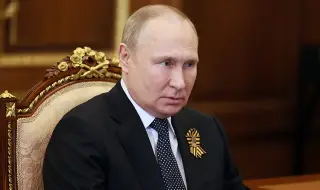
In political terms, the Ukrainian operation "Cobweb" managed to hit Russia where Vladimir Putin's regime has invested the most, both economically and in terms of propaganda.
This is the security sphere. It is around it that the Russian president builds the legitimacy of his government. It is oriented not towards providing a standard of living and services, but towards order and security.
Moreover, the gradual escalation of the war against Ukraine, which began with the Russian occupation of the Crimean peninsula in 2014, is accompanied by an extreme securitization of politics in Russia. The latter means that the country's economy is organized around the war, and in the name of ensuring the military operations of the Russian Federation, it prioritizes projects and investments related to military operations, rather than alternative needs of the Russian population.
In this case, the Ukrainian operation "Cobweb" was a direct blow to the legitimacy of Vladimir Putin, who argued, including the reasons for starting the war in Ukraine, as an effort to ensure Russia's security.
In this regard, the political effect of the Ukrainian operation in question is more important even than its strategic dimension (the compromise of part of Moscow's long-range aviation, although probably not as large a part as is currently claimed). If every politician "sells" something to his people, then Putin was selling security to the Russians. But through his operation, Ukraine showed that the Russian president's goods are rotten.
And corresponding to the political effect is always the psychological one. If Kiev can strike at sites of national importance to Russia, which traditionally have a high level of protection, what does this mean for the civilian population?
Of course, Ukraine has previously struck Russian targets of military importance, including destroying Moscow's combat aircraft, but what is specific in this case is that this time it is a complex strike on Russian bases from Russian territory (that is, to and from Russia). Kiev's message in this case is that the enemy is closer than Moscow thinks. And that Russia's strategic assets, although located at a distance, are actually accessible - at arm's length - to Ukraine.
Although it is unlikely that sufficient information will be available soon to shed further light on Operation "Spiderweb", it already looks remarkable in its design and execution.
The first thing that is striking is the large-scale perimeter of the operation in question, which targeted five Russian air bases (in Murmansk, Irkutsk, Ivanovo, Ryazan and Amur regions), located thousands of kilometers from each other. The planned strike on at least one air base, located in the Amur region "Ukrainka", however, failed, for reasons that are currently unclear.
The logistics of the operation also deserve attention, as it involved the introduction of unmanned aerial vehicles into Russian territory, their placement in special containers with a "double ceiling" and their planned movement to various and remote points of the Russian Federation.
Local truck drivers were also hired for this purpose, who had no idea what they were actually transporting. They were hired by a man who introduced himself as "Artyom", who explained that he had to fulfill an order to deliver modular homes to clients in different parts of Russia (apparently the cargo of the trucks, consisting of containers, was explained to the local drivers as fragments for assembling houses).
The final phase of the operation, which involved the takeoff of the drones, located thousands of kilometers apart, also had to take place in the most coordinated way possible, so as not to give the Russian security forces the opportunity to orient themselves in the crisis situation.
In fact, every step of Operation "Cobweb" demonstrates the failure of the Federal Security Service of Russia (FSB), whose job is to prevent such threats.
Russian counterintelligence has failed to detect and thwart an operation that was conceived in Ukraine, but was implemented for a long time on Russian territory, including by renting premises and people for operational purposes. And the latter is another response to Vladimir Putin's security request.
Operation "Spiderweb" is being implemented at a difficult time.
From a purely military point of view, it was preceded by the most serious combined strikes, consisting of unmanned aerial vehicles, cruise and ballistic missiles, that Russia has carried out against Ukraine since the beginning of the war. The scale of these Russian attacks has exposed the deficiencies of Ukraine's missile defenses, including the American Patriots, against which Russian Iskander-M modifications are increasingly effective.
From a diplomatic perspective, the operation was carried out the day before the Ukrainian and Russian delegations were to meet in Turkey for negotiations. The fact that the Russians did not use the Ukrainian attack as a pretext to not attend the negotiations is more a function of their desire to marginalize the significance and damage of Operation Spiderweb.
But it has reinforced the Russian position with which the delegation from Moscow arrived in Istanbul. The fact that the second meeting of the resumed negotiations between Kiev and Moscow in Turkey lasted just over an hour is indicative that the two delegations have limited their contact with each other to exchanging their proposals for a ceasefire rather than discussing them.
In terms of planning and execution, Operation "Cobweb" is definitely an art. It managed to hurt Vladimir Putin politically and Russia strategically. "Artyom" is now officially wanted by the FSB.
But this operation, in itself, cannot stop the long-range strikes on Ukraine, as long as the Russian combat aviation has enough strategic bombers on operational readiness. The Ukrainian Operation "Cobweb" achieved its goals, but it is far from enough to reverse the dynamics of the conflict.