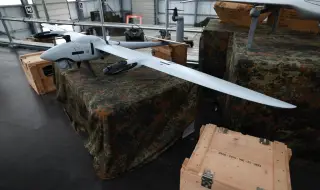
A new structure will be created within the federal police as early as 2025 - a unit to combat drones. It is also planned to open centers for countering drones - at the federal and state levels.
The changes are enshrined in the draft of a new police law approved by the government. The reform still needs to be approved by both chambers of parliament - the Bundestag and the Bundesrat. In addition to powers to counter drones, the law will significantly expand the competences of the federal police. The current police law is more than 30 years old, German public broadcaster ARD recalls in this regard.
What exactly is planned in the new law?
The draft law aims to legally regulate the new powers of the federal police to repel drones in their areas of competence - such as airports and railway infrastructure, as well as to use drones - for example during demonstrations. The draft, a copy of which is available to ARD, states: "In order to repel the danger arising from unmanned aerial vehicles on land, in the air and at sea, the federal police may use appropriate technical means against them (…), if repelling the danger in other ways would be hopeless or very difficult".
The federal police will now have the right to shoot down drones and will be able to assist the police services in the individual 16 states in defending against drones if such assistance is requested. To this end, the police must receive more devices - they will cost about 90 million euros per year. In addition, 341 additional employees must be hired to operate the equipment in question, adds ARD.
According to Interior Minister Alexander Dobrint, a joint Drone Countermeasures Center will also be established, in which the police, customs, the Federal Criminal Police Office and the federal state authorities will be represented. The aim is to integrate police and military forces even more closely to counter drones and to develop new countermeasures capabilities.
More powers for the police
The federal police will receive more powers and competences in locating mobile phones and providing data on airline passengers. In the future, it will be allowed to wiretap phones and collect location data and other user data, for example to prevent extremists from entering the country or to reveal the routes of traffickers. The police will also be able to impose residence bans - the aim is to prevent, for example, potential criminals from being present in certain places such as train stations or airports. This goes beyond the provisions for the so-called eviction from a place, which is only a temporary measure. The new residence ban will also be used to protect against drones near airports.
The Federal Police is subordinate to the Ministry of the Interior and is responsible for border protection, the security of train stations, airports and federal authorities - such as the Federal Chancellery. The police also provide assistance to the provincial authorities when they request such assistance.
What else is planned?
In the case of the drones in the area of Munich airport, the military was asked to help. With the changes to the air safety law, the Bundeswehr is now given the authority to provide assistance in the event of a drone threat - for example, when military drones are detected at high altitude.
The amendments to this law are already being discussed by the government, and according to Minister Dobrindt, there are no differences in the views of the ministries of the interior, defense and justice.