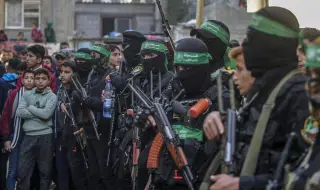
The severely weakened group „Hamas“ is trying to restore its influence in Gaza after the ceasefire came into effect, Reuters reports, News.bg reports.
Since the start of the ceasefire, the group has eliminated at least 33 people in reprisals against other armed groups, and appears to receive temporary approval from the US to control the destroyed enclave.
After Israeli strikes during the war triggered by the attacks on October 7, 2023, „Hamas“ is gradually returning its members to the streets of Gaza, taking a cautious approach in case the ceasefire is violated.
Yesterday, the „Al Qassam“ Brigades - the military wing of „Hamas“, were deployed to free the last surviving hostages kidnapped by Israel two years ago. It highlights one of the challenges facing US President Donald Trump's efforts for a lasting deal on Gaza, as the US, Israel and other countries insist „Hamas“ disarm.
A local security source said that after the ceasefire, „Hamas“ forces killed 32 members of a „gang linked to a family in Gaza City“, and six of its own personnel were also killed. A video clip shared on social media showed masked men, some wearing green headbands, shooting at least seven people, forcing them to kneel in the street. Civilian bystanders shouted „Allahu Akbar” and denounced the dead as “collaborators“.
Last month, Hamas authorities announced that they had executed three men accused of collaborating with Israel.
Temporary police role
Trump's plan calls for the dissolution of “Hamas“ in a demilitarized Gaza run by a Palestinian committee under international supervision, with the support of a stabilization mission to train Palestinian police forces. At the same time, however, Trump hinted that “Hamas“ would be given a temporary green light to police control.
“They want to stop the trouble and we have given them approval for a certain period of time,“ Trump said. After the truce came into effect, Ismail al-Tawabta, head of the “Hamas“ media office, confirmed that the group would maintain order and security ownership.
„Hamas“ has ruled out discussing its weapons, saying it is ready to hand them over to a future Palestinian state, but has stressed that its role in governance must be negotiated by the Palestinians without foreign control.
Internal conflict with clans
As it has weakened, „Hamas“ has faced increasing internal challenges, especially with clans with which it has long been in conflict. Israeli Prime Minister Benjamin Netanyahu said earlier this year that his country supports clans opposing „Hamas“.
In Gaza City, the main opponent is the „Dogmosh“ clan, led by Yasser Abu Shabab in Rafah. His group recruits fighters with attractive salaries, and „Hamas“ accuses him of collaborating with Israel, which it denies.
Hamas forces have killed Abu Shabab's "right-hand man" and are working to eliminate his leader. Hussam al-Astal, another anti-Hamas figure in Khan Yunis, said Hamas's role would end after the hostages are released.
Analyst Reham Ouda said Hamas's actions were aimed at deterring groups that had collaborated with Israel and showing that its security personnel should participate in a new government, even though Israel rejects it.