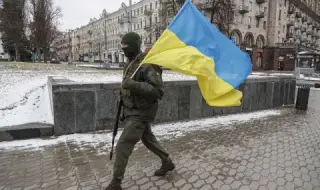
The Ukrainian counterattack in Kupyansk shows that the army is capable of defending itself and counterattacking against significant Russian attacks.
This refutes Russian President Vladimir Putin's claim that Ukrainian defenses are collapsing.
This is according to the Institute for the Study of War (ISW).
The Ukrainian offensives in Kupyansk and the surrounding area show that Ukrainian forces are capable of conducting successful counterattacks and achieving tactically significant successes, especially when Russian forces are too dispersed.
Capturing Kupyansk is a priority for Russia from mid-to-late July 2025, but Russian forces have not been able to mobilize enough forces to overcome Ukrainian defenses in this area, as they are conducting intensive offensive operations elsewhere in the theater of operations.
Russian forces are also struggling to move troops into Kupyansk because Ukrainian forces have successfully maintained control of Russian logistics north of Kupyansk since before the last Ukrainian breakthrough.
The Russian attacks have been achieved at disproportionately high casualties and significant time costs, and Russian forces have been forced to commit 150,000 troops in the Pokrovsk direction alone.
Putin and senior Russian military officials have recently stepped up exaggerated claims of progress along the front line in recent weeks, and on November 21, Putin stressed that Russian forces "inevitably" will repeat their operations in the direction of Kupyansk and in other areas of the front.
However, these exaggerated claims of progress are untrue, and even a prominent military blogger close to the Kremlin stated that the Ukrainian counteroffensive "has benefited" from "some not entirely true statements" - acknowledging that Putin's November 27 claim that Kupyansk had been captured was false.
Putin and senior Russian military officials are trying to portray the front line in Ukraine as on the verge of collapse so that Ukraine and the West will agree to Russia's demands, but this Ukrainian counterattack in Kupyansk, along with stubborn Ukrainian resistance along the rest of the line, shows that this version is false.
The general outlines of Ukraine's counter-proposal to the latest US peace proposal are beginning to emerge, but its details are still unclear.
On December 11, Ukrainian President Volodymyr Zelensky announced that Ukraine had provided the US with an updated framework for the peace proposal, containing 20 key points, and was expecting a response from the US.
Ukrainian presidential adviser Mykhailo Podoliak told the French publication "Le Monde" reported that the Ukrainian proposal to the United States contains three parts: a 20-point proposal to end the war, a proposal to create a post-war European security architecture and guarantees for Ukraine's security, and a proposal for Ukraine's reconstruction and defense capabilities.
Podolyak said that Russia should pay reparations to help rebuild Ukraine. Podolyak said that Ukraine agreed to create a demilitarized "buffer" zone in Donbas, but that both Russian and Ukrainian forces would have to withdraw from the current front line to create this zone. Zelensky further suggested at the briefing that Ukraine hold a referendum on the territorial provisions of the U.S. peace proposal.
Zelensky reiterated his proposal to hold elections, but said Ukraine would need a ceasefire and additional security from the U.S. and European countries to ensure democratic elections.
The exact components of Ukraine's counterproposal — including the provisions of such a referendum and the possible borders and terms of a ceasefire or demilitarized zone — remain unclear as of December 12.
The Kremlin has flatly rejected Ukraine's proposals for a ceasefire and referendum.
The Kremlin has rejected Ukraine's proposal to create a demilitarized zone.
On December 12, the European Union (EU) agreed to freeze 210 billion euros (about $247 billion) of Russian assets indefinitely in exchange for providing Ukraine with a reparations loan of up to 165 billion euros (about $194 billion).
Ukrainian forces have recently advanced near Kupyansk and Aleksandrovka. Russian forces have recently advanced in the Kostyantynivka-Druzhkovka tactical zone and near Hulyaipole.