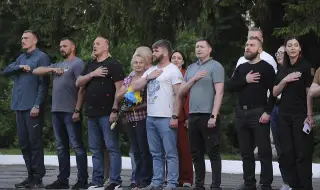
Ukrainian soldiers on the front line have almost no opportunities to shake off the hard work. Which is why some of them are addicted to gambling. Is Russia taking advantage of this? And is it even encouraging gambling addiction?
Andriy (name changed) is over 50 and is one of many Ukrainian soldiers addicted to gambling. He agreed to speak to the German public broadcaster ARD only with his face covered so as not to be recognized.
This passion pushes everything else into the background, the man tells ARD. "You only think about the game, it attracts you like a magnet, and at some point you realize that your life consists only of that."
Andriy has been serving for four years. He has been addicted to gambling for 15 years - he started with sports betting, first with small amounts, then he started increasing his bets, and because he was losing, he went into debt. For several years he managed to free himself from the addiction, but in the army he succumbed to it again.
"Everyone longs for something that will bring them joy"
As the soldier shared with ARD, there is a very strict regime in his unit. "We can't leave the field often, we spend 90 percent of our time here, year after year. "Everyone longs for something that will bring them joy, but there are almost no opportunities," the soldier says, adding: "I wanted to relive the feelings I felt when I watched my favorite teams play, when they scored goals and I was happy."
There is no information on how many soldiers in the Ukrainian army are addicted to gambling. But it is a fact that military personnel engage in online games of chance more often than civilians, psychologist Tetyana Sinitska, who works in an organization providing therapy for gambling addicts, told ARD.
"We, civilians, have opportunities to diversify our lives - we can go to the cinema, read a book or meet friends. But what could a person do in the army, where there are no such opportunities? Games of chance are easily accessible via smartphone, reduce stress and distract from reality."
In Ukraine, games of chance, which were banned for years, have been allowed again since 2020, ARD recalls. And the fact that addiction to them is spreading in the army has been known for two years. In 2024, soldier Pavlo Petrichenko launched a petition on the website of the Ukrainian president, asking to limit the military's access to online and offline casinos.
And it hit a nerve, the German media notes. In just a few hours, 25,000 signatures were collected, and the president was forced to address the issue. Today, two years later, the government is taking action: the State Service for Regulation of the Gambling Market must ensure that servicemen can no longer register on the relevant platforms.
So far, such bans have been imposed on 13,500 gambling addicts who are included in the register of pathological gamblers. Now the ban should apply to all servicemen.
Is there Russian interference?
Deputy Minister of Digital Development Natalia Denikeeva recently admitted on Ukrainian radio that steps should have been taken much earlier - not least because of the suspicion that Russia is behind some of the illegal casinos. "When they play, soldiers give access to their data. And this, to put it mildly, does not contribute to our defense capabilities. This can be dangerous for both people and their families. It can be dangerous for our country too," Denikeeva warned.
However, only access to official platforms and bookmakers can be blocked. Soldier Andriy does not believe that this will be enough to reduce gambling addiction among soldiers. "Anyone who is inventive will find other ways. For example, I was playing on a platform that is not registered in Ukraine. And I used cryptocurrency to top up my account there."
In the meantime, Andriy has started therapy. And he hopes that he will soon be able to overcome his addiction.